
Most people who love space never become astronauts. They become the people who explain it to everyone else, the communicators, the educators, the enthusiasts who understand that the most powerful thing you can do for a field is help ordinary people care about it.
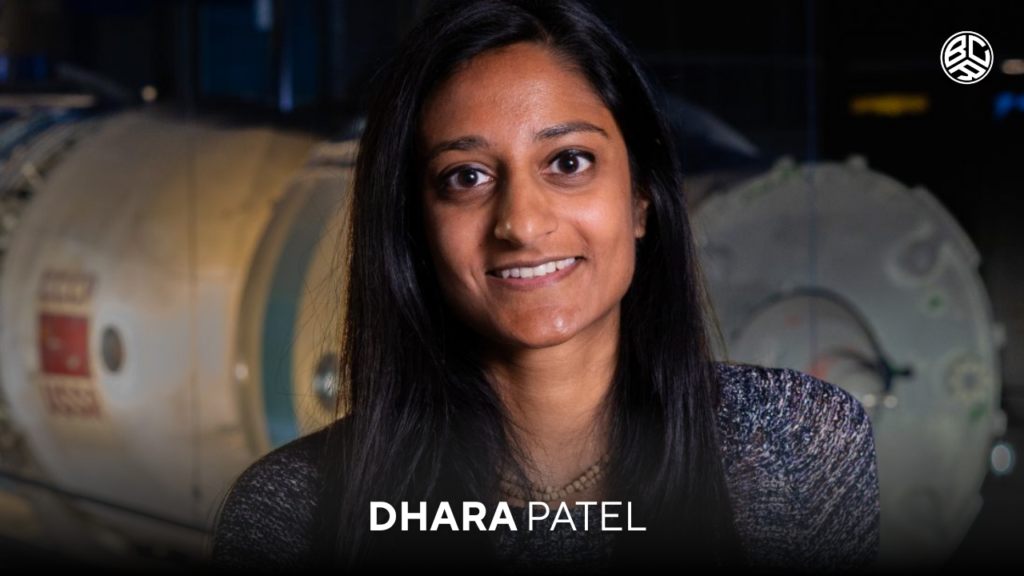
She is a British space science communicator, astronomer, and Space Expert at the National Space Centre in Leicester, one of the UK’s most significant public science venues. Over the course of a career that has moved from a secondary school classroom to the Royal Observatory Greenwich to the floor of the National Space Centre and onto stages at international astronomy festivals, she has become one of the more recognizable voices in British public astronomy.
Her work is not about making headlines. It is about making the universe accessible by taking the extraordinary complexity of space science and finding the part of it that connects with a curious ten-year-old, a retired teacher, a first-time visitor to a planetarium, or a conference audience of astronomy enthusiasts. That skill genuinely rare, genuinely valuable is what defines her career.
Quick Summary
| Category | Details |
|---|---|
| Name | Dhara Patel |
| Profession | Space Expert, Astronomer, Science Communicator |
| Current Organization | National Space Centre, Leicester |
| Education | Master’s degree in Physics, University of Leeds |
| Previous Role | Royal Observatory Greenwich |
| Earlier Career | Secondary school science teacher |
| Specialization | Astronomy, space education, public engagement |
| Book | Space Exploration (Illuminates series) |
A Physics Graduate Who Started by Teaching
Dhara Patel studied Physics at the University of Leeds, completing a Master’s degree that gave her the scientific foundation everything else would build on. A Master’s in Physics from a research university is not a light credential; it requires sustained engagement with the kind of quantitative and theoretical thinking that most people find genuinely challenging, and it reflects a serious commitment to understanding how the universe actually works at a fundamental level.
After her studies, she became a secondary school science teacher. This is worth noting because it is a path that many science graduates skip heading directly into research or industry or postgraduate study rather than into a classroom. Teaching secondary school science is demanding work that requires translating complex ideas into language that young people with varying levels of interest and aptitude can engage with. It requires patience, creativity, and a genuine belief that the subject matters enough to fight for a student’s attention.
That experience did not disappear when she left teaching. It became the foundation of everything she does now. Understanding how to explain science clearly to people who are not already invested in it is a skill that has to be learned and practiced and Dhara Patel learned it in classrooms before she ever stood in front of a planetarium audience.
Six Years at the Royal Observatory Greenwich
The Royal Observatory Greenwich occupies one of the most symbolically important locations in the history of science. It sits on the Prime Meridian, the line that divides the eastern and western hemispheres of the world and it was from here that the world’s time zones were first standardized. For a science communicator with a background in physics and a passion for astronomy, it is about as resonant a workplace as exists in Britain.
Dhara Patel joined the Royal Observatory and spent approximately six years there in different education and outreach roles. During that time, her responsibilities covered an impressive range of public-facing science work.
She presented a planetarium showing immersive experiences in which a domed ceiling becomes the night sky and audiences travel through the cosmos guided by a narrator who has to hold their attention and their understanding simultaneously. Planetarium presenting is a particular kind of performance art: it is part lecture, part theater, and the communicator has to be comfortable working in the dark while maintaining a connection with an audience they can barely see.
She hosted astronomy workshops and led telescope observation sessions, the hands-on, tactile side of astronomy education that moves the subject from abstract to experiential. Seeing a planet through a telescope for the first time is a different kind of knowing than reading about it on a page, and she was the person facilitating that moment for visitors who came to Greenwich to understand the sky.
She also handled science media requests, the questions that come in from television programs, radio shows, newspapers, and online publications when a space story breaks and an institution needs someone who can explain it clearly and quickly. This kind of work is fast-paced and requires being able to distill complex scientific developments into accessible language without sacrificing accuracy. It is a different skill set from planetarium presenting, and Dhara developed both.
Her time at Greenwich also included contributions to science books and educational materials adding a writing dimension to a career that was already spanning spoken performance, education, and media.
What Science Communication Actually Is
The field Dhara Patel works in deserves some explanation, because “science communication” is a phrase that covers a very wide range of activities and is not always well understood by people outside it.
At its most basic, science communication is the practice of sharing scientific knowledge with audiences that are not specialists. But that description undersells what it actually involves.
Good science communication requires understanding your subject deeply enough to know which parts matter most, which details can be simplified without distortion, and which complexities genuinely cannot be collapsed without losing the truth of the thing. It requires understanding your audience what they already know, what they find interesting, what barriers they bring to the subject and meeting them where they are rather than where you wish they were.
It also requires a kind of intellectual generosity: the willingness to believe that the people in front of you are capable of understanding something difficult, and the patience to help them get there. This is not a passive skill. It has to be cultivated.
The best science communicators are not simplifiers who water things down. They are translators who find the entry point, the hook, the story, the analogy that makes a complex idea click for someone encountering it for the first time. That is what Dhara does.
Joining the National Space Centre
In January 2022, Dhara Patel joined the National Space Centre in Leicester as a Space Expert, the title that appears under her name in everything from panel event programs to educational resource pages.
The National Space Centre is one of the UK’s most significant public science institutions. It houses permanent exhibitions about space exploration, a digital planetarium, artifacts from the history of space science, and a range of educational programs for schools and families. It is also an active part of the UK’s effort to build public engagement with the space sector, important at a time when the British space industry is growing rapidly and the need for a scientifically literate public has never been more pressing.
Her role at the Centre involves a mix of content creation, event organization, media interviews, and educational programming. She creates digital science content articles, videos, social media posts that keeps the public connected to developments in astronomy and space exploration as they happen. She organizes space-related events and speaks at them. She gives interviews about missions, discoveries, and developments in the space sector to media outlets that need an expert voice.
One of the dimensions of her work that she has been particularly vocal about is the diversity of careers available in the space industry. The popular image of space work is still shaped heavily by astronauts and while astronaut programs are genuinely significant, they represent a vanishingly small fraction of the workforce that makes space science and space exploration possible. Engineers, programmers, data scientists, communicators, educators, policy experts, manufacturers, and logisticians are all essential to what gets launched, studied, and understood. Dhara has been consistent in advocating for young people to see themselves as potential contributors to that ecosystem regardless of which role appeals to them.
Author of Space Exploration
Dhara Patel is also the author of Space Exploration, a book in the Illuminates series, a nonfiction series designed to introduce readers to significant topics through clear, engaging writing.
The book covers the history and science behind humanity’s journey beyond Earth: the early pioneers, the major missions, the technology that made it possible, and the questions that continue to drive exploration forward. Writing a book for a general audience on a topic as broad as space exploration requires the same skills she deploys in every other medium: clarity, selection, and the ability to convey genuine enthusiasm without overwhelming the reader.
The fact that she has written for a young and general readership in addition to speaking at science festivals and professional events illustrates the range of her communication work. She is not a specialist in one format. She finds the right format for the right audience and executes it well.
Astronomy Events and Public Stages
Dhara has appeared at European AstroFest, one of the most significant public astronomy events in Europe, where she has spoken about major developments in space exploration and upcoming astronomical events. She has also been involved with the Royal Society in discussions about careers in the space sector.
These appearances position her within the professional astronomy communication community, not just as a local or institutional figure but as a voice that the broader field recognizes as worth platforming. The people who program astronomy festivals are selective about who they invite to speak, and the consistency of her appearances reflects a reputation built through demonstrated quality.
Why Her Kind of Work Matters
The space sector generates discoveries at an extraordinary rate. New exoplanets are confirmed. Telescope images arrive that rewrite what we thought we knew about the early universe. Missions launch, succeed, fail, and teach us something in either case. Black holes are imaged for the first time. Mars gets a rover.
Without people like Dhara Patel, most of that happens in a domain that the general public cannot access, too technical, too jargon-heavy, too far removed from the everyday experiences that make something feel relevant.
Science communication is not a luxury for the space sector. It is how public funding gets justified, how young people decide to enter the field, and how a society develops the kind of relationship with science that allows it to make informed decisions about investment, policy, and the future.
She is one of the people doing that work in Leicester, on stage at astronomy festivals, in books, in interviews, and in every planetarium show she has ever narrated with the dome lit up above a crowd of people who came to understand what is out there.
Conclusion
Dhara Patel’s career is a study in what happens when someone with genuine scientific knowledge, genuine teaching instincts, and genuine communication ability finds the right platform. She started in a classroom. She moved to one of the world’s most historically significant observatories. She is now a Space Expert at a national science centre, helping people of all ages understand why the universe overhead is worth looking at.
The space sector needs researchers and engineers. It also needs people who can make those researchers and engineers’ work matter to the rest of us. That is what she does every presentation, every interview, every page.
Discover Also Shane DiGiovanna: The Science Dreamer Who Turned a Painful Condition into a Platform

M Adnan Akram is the founder and lead writer at Back Casting Room, where he covers celebrity biographies, family histories, and the lesser-known figures behind well-known names. His work focuses on separating verified public information from speculation, drawing on publicly available records, interviews, and credible reporting to build accurate, well-researched profiles.
With a particular interest in entertainment and pop culture, Adnan writes about everything from celebrity net worth breakdowns to the private individuals connected to famous names, the spouses, family members, and background figures whose stories rarely get told in full.
At Back Casting Room, the goal is straightforward: give readers accurate, well-sourced information without the clickbait or unverified claims that often surround celebrity-adjacent stories.