
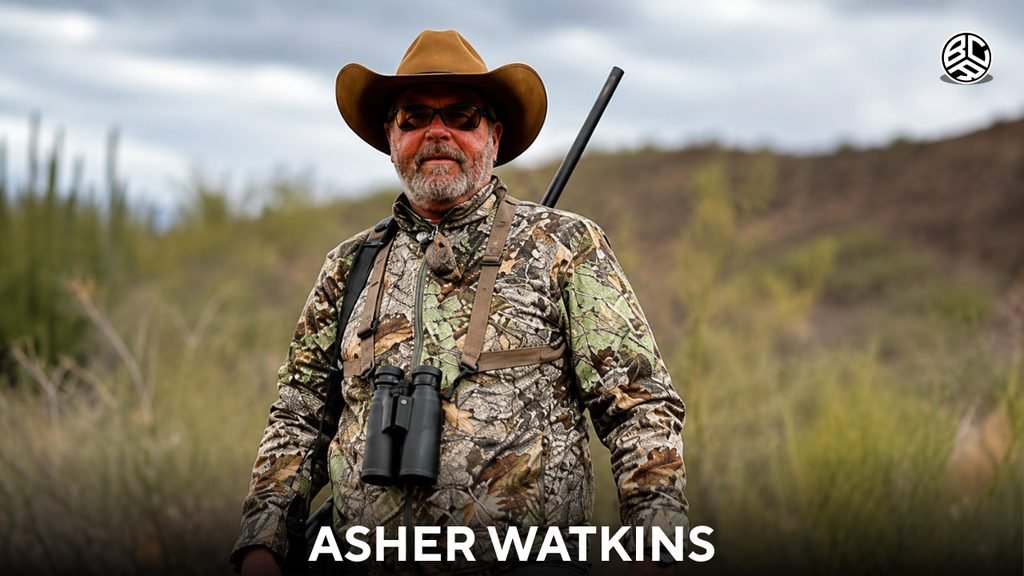
Asher Watkins spent his career trading in wild places, vast Texas ranches where white-tailed deer moved through cedar breaks, Colorado mountain properties where elk crossed through aspen groves, Nevada spreads measured not in acres but in grazing capacity. He understood land the way a surgeon understands anatomy: not just the surface, but what lay beneath the mineral rights, the water, the wildlife habitat, the generational potential of a working ranch.
He was 52 years old when a Cape buffalo weighing approximately 1.3 tonnes killed him in Limpopo Province, South Africa, on August 3, 2025.
The international headlines that followed called him a “millionaire rancher” and a “real estate magnate.” The truth is more specific and more interesting than either of those labels: the story of a Dallas man who built a highly specialized career at the intersection of land, wildlife, oil, and luxury real estate, and who died doing something he had spent a lifetime preparing for.
Quick Summary
| Item | Information |
|---|---|
| Full name | Asher Austin Watkins |
| Born | July 13, 1973 |
| Birthplace | Dallas, Texas, USA |
| Died | August 3, 2025 |
| Age | 52 |
| Residence/career base | Dallas, Texas |
| Profession | Ranch/land real-estate broker, landman, businessman |
| Company | Watkins Ranch Group |
| Sotheby’s affiliation | Briggs Freeman Sotheby’s International Realty; later LIV Sotheby’s International Realty in Colorado |
| Education | Missouri Military Academy; Baylor University; University of North Texas; TCU Neeley Landman program |
| Known for | Luxury ranch sales, land, hunting/outdoors, wildlife and conservation interests |
| Cause of death | Fatal attack by a Cape buffalo while hunting in Limpopo, South Africa |
Growing Up in Dallas, Then Missouri
Asher Austin Watkins was born on July 13, 1973, at Baylor Hospital in Dallas, Texas. He grew up in the city, attending St. Michael’s and Highland Park schools through ninth grade before his parents sent him to the Missouri Military Academy in Mexico, Missouri.
MMA shaped him in ways he would later acknowledge. He graduated with the class of 1992 as a Cadet Captain and C-Company Commander, a role that put him in charge of approximately 70 cadets. His family described the academy as a significant influence on his character, the kind of institutional experience that leaves a mark on how a person thinks about responsibility and leadership.
His subsequent education included time at Baylor University and the University of North Texas, from which he graduated. He also completed the TCU Neeley Landman program, a credential in the specialized world of oil and gas land work that would define the early chapter of his professional career.
From Oil and Gas to Ranch Brokerage
Watkins entered the workforce in the upstream oil and gas industry, working as a landman, a professional who handles the acquisition of mineral rights, lease negotiations, title research, and the complex ownership questions that arise when energy companies want to drill on private land.
That background gave him something most ranch brokers do not have: a technical understanding of what lies beneath a property’s surface. Mineral rights, easements, water rights, the details that make or break a large land transaction were not abstractions to him. They were the substance of his early career.
Over time, he moved from energy land work into commercial real estate and eventually into the specialized world of ranch and recreational property brokerage. He founded Watkins Ranch Group, which he led as managing partner, and affiliated the group with Briggs Freeman Sotheby’s International Realty, a premium brand that gave WRG the credibility to compete at the top end of the Texas ranch market.
A 2019 profile in People Newspapers described him as having specialized for more than a decade in large rural properties and commercial land. At the time, he was representing the 25 Ranch in Battle Mountain, Nevada, a property with more than 600,000 grazing acres listed for $36.5 million. That is not a transaction for a generalist agent. It requires knowing how to price pastureland, evaluate carrying capacity, understand water rights across a vast area, and market a property to a buyer who is not looking for a vacation home but an operational enterprise.
The Properties He Represented
The scale of Watkins’ listings reflects how seriously he was taken in the premium ranch market.
In May 2025, just months before his death, he was representing Lone Spring Ranch in Bosque County, Texas roughly 2,000 acres listed at $23.475 million. The property combined hunting, fishing, cattle operations, lakes, a main residence, a guesthouse, and a lake house. He described it in marketing materials as a place where families could hunt, fish, work the land, and create a legacy.
In Colorado where Watkins Ranch Group had expanded in 2024 through LIV Sotheby’s International Realty he was simultaneously representing multiple high-value properties. Inspirit Ranch near Guffey offered approximately 890 acres of elk and deer habitat for $5.775 million. East Farm in Kiowa County stretched across roughly 4,009 acres of agricultural and hunting land listed at $5.25 million. Sinbad Ranch in western Colorado offered around 1,954 acres at $8.845 million, with agricultural, wildlife, and water-rights attributes.
The 2024 Colorado expansion was significant. WRG’s entry into that market through LIV Sotheby’s with Watkins as managing partner alongside partners Will Beuck, Harlan Hudson, and Cliff Carney represented an actively growing business, not a career coasting into its final years.
Earlier in his career, he had also represented Wildcat Mountain Ranch in Texas, a 5,200-acre property west of Fort Worth that included a large hunting lodge, lakes, cattle infrastructure, and wildlife management programs.
A Life Built Around Hunting and Conservation
Hunting was not something Asher Watkins did separately from his professional life. It was woven through it.
He grew up working on his family’s hunting and cattle ranch, an upbringing that gave him both the land knowledge and the outdoor skills that defined his career. His professional biography described him as an avid hunter and fisherman who traveled extensively, both to evaluate properties and to spend time in the field.
He was a life member of the Dallas Safari Club, involved with Ducks Unlimited, and a registered landman and lifetime member of the American Association of Professional Landmen. His professional identity was shaped by a belief that hunting, wildlife management, and conservation are connected and that responsible hunters who understand habitat are often the most committed advocates for the land.
He passed that belief to his daughter Savannah. His obituary describes introducing her to hunting and outdoor activities at a young age, coaching her sports teams during her elementary school years, and emphasizing the responsibilities that come with hunting not just the sport of it, but the stewardship it implies.
His death generated significant public debate about trophy hunting. Animal-rights organizations criticized the circumstances of his death and the broader practice it represented. His supporters and hunting community remembered a man who saw his work in land and wildlife as deeply connected.
Both of those perspectives exist, and both were expressed publicly in the days that followed.
What Happened in South Africa
On August 3, 2025, Asher Watkins was on a hunting safari in Limpopo Province organized by Coenraad Vermaak Safaris, operating on the Bambisana hunting concession reportedly exceeding 50,000 acres and known for buffalo, sable, and kudu.
He was tracking a Cape buffalo alongside a professional hunter and a tracker. According to the safari company, the buffalo was unwounded when it suddenly turned and attacked him. CVS described the attack as sudden and unprovoked.
Limpopo police spokesperson Colonel Malesela Ledwaba confirmed that an inquest had been opened. Police said the incident occurred around 13:00 on a farm along the N1 toward Musina. When officers arrived, Watkins was already deceased, with injuries to his stomach and side. A dead buffalo with a bullet wound was found nearby.
The safari company said the buffalo was unwounded before the attack. Police found it dead with a bullet wound afterward. The exact sequence of what happened between those two facts who fired, when, and in what order was not publicly reconstructed in the reporting available.
He was pronounced dead at the scene. He was 52.
The Memorial and What He Left Behind
A memorial service was held on August 22, 2025, at Highland Park United Methodist Church in Dallas. His daughter Savannah, his former wife Courtney, his mother Gwen, his brother Amon, and his stepfather Tony survived him.
His business, Watkins Ranch Group, had been actively expanding in the months before his death. The Colorado expansion was less than a year old. Multiple listings were active. By all visible evidence, he was at a peak professional moment not slowing down, but growing.
The ranch market he specialized in the overlap of land, wildlife, mineral rights, heritage, and investment is not a niche that produces many practitioners with his depth of experience. He spent decades building knowledge that took years to acquire and cannot simply be replaced.
Conclusion
Asher Watkins built a career out of understanding land in all its dimensions: the soil and the minerals beneath it, the wildlife above it, the legal rights running through it, and the human desire to own something that endures. He was serious about hunting in the way that serious hunters are: as stewardship as much as sport, as a relationship with wild places that carries responsibility.
He died in one of those wild places, doing something he had done many times before, in circumstances that no level of preparation can fully guard against.
The Cape buffalo is widely considered one of the most dangerous animals on the African continent. Asher Watkins knew that. He went anyway and that, for anyone who understood who he was, would not have surprised anyone who knew him.
Discover Also Claire Hogle Age, Career, and Everything You Need to Know About the Golf Creator

M Adnan Akram is the founder and lead writer at Back Casting Room, where he covers celebrity biographies, family histories, and the lesser-known figures behind well-known names. His work focuses on separating verified public information from speculation, drawing on publicly available records, interviews, and credible reporting to build accurate, well-researched profiles.
With a particular interest in entertainment and pop culture, Adnan writes about everything from celebrity net worth breakdowns to the private individuals connected to famous names, the spouses, family members, and background figures whose stories rarely get told in full.
At Back Casting Room, the goal is straightforward: give readers accurate, well-sourced information without the clickbait or unverified claims that often surround celebrity-adjacent stories.