
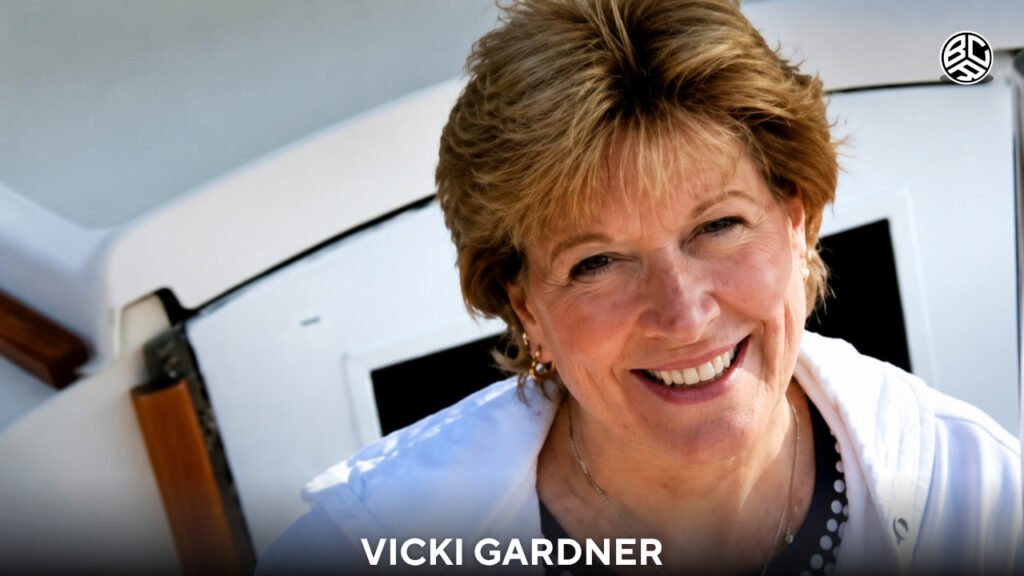
On the morning of August 26, 2015, Vicki Gardner was doing something entirely ordinary. She was giving a live television interview about tourism at Smith Mountain Lake in Virginia, the kind of segment that plays out on local morning news programs hundreds of times a day across the country. A reporter asked questions. A cameraman filmed. She answered.
Then a man with a gun walked into the frame.
Vicki Gardner survived what Alison Parker and Adam Ward did not. She was shot in the back during a live broadcast that was seen across the country before anyone fully understood what they were watching. She lost a kidney and part of her colon. She underwent multiple surgeries. And after months of recovery, she returned to her life with a deliberate quietness rarely seeking the spotlight that had, for the worst possible reason, briefly found her.
Quick Summary
| Category | Details |
|---|---|
| Full Name | Vicki Gardner |
| Nationality | American |
| Profession | Business Executive |
| Known For | Sole survivor of the 2015 WDBJ live TV shooting |
| Former Role | Executive Director, Smith Mountain Lake Regional Chamber of Commerce |
| Incident Date | August 26, 2015 |
| Injuries | Gunshot wound; lost one kidney and part of her colon |
| Current Status | Survived and recovered after multiple surgeries |
| Public Figure Status | Public figure due to her involvement in the nationally covered 2015 shooting |
Who Is Vicki Gardner?
Before August 26, 2015, Vicki Gardner was known in her community as a capable and dedicated business leader. She served as the Executive Director of the Smith Mountain Lake Regional Chamber of Commerce in Virginia, a role that involved promoting tourism, supporting local businesses, and representing the interests of her region’s commercial community.
It is the kind of role that is essential to a community without ever generating national headlines. She was a professional doing important local work, connected to her region, trusted by the people she worked with.
Her appearance on WDBJ that morning was a natural extension of that work. She was there to talk about Smith Mountain Lake as a destination to represent her community to a regional television audience. She was not a journalist, not a politician, not a celebrity. She was a chamber of commerce director doing her job.
The Shooting: What Happened
At approximately 6:45 a.m. on August 26, 2015, reporter Alison Parker was conducting a live interview with Gardner at the Smith Mountain Lake Visitor Center. Cameraman Adam Ward was behind the lens.
Vester Lee Flanagan II, a former WDBJ reporter who had been fired from the station in 2013 following workplace conflicts and who used the on-air name Bryce Williams, approached the group and opened fire.
Alison Parker was killed. Adam Ward was killed. Vicki Gardner was shot in the back and collapsed to the ground as the broadcast cut away.
The entire attack was captured on live television and, simultaneously, on a camera Flanagan himself was carrying. The footage spread rapidly across social media before platforms could intervene. Millions of people saw something they could not unsee and in the chaos of those early minutes, many viewers did not yet understand that what they had watched was real.
Flanagan fled the scene. During a subsequent police pursuit, he was located and died from a self-inflicted gunshot wound.
Vicki Gardner’s Injuries
The medical consequences of the shooting were severe.
Gardner was shot in the back at close range. The bullet caused catastrophic internal damage that required emergency surgery and multiple subsequent procedures. Doctors removed one of her kidneys. They also removed part of her colon.
She spent approximately two weeks in the hospital before being released. The physical recovery from injuries of that severity not just the initial surgeries but the extended rehabilitation takes months. The psychological dimensions of surviving something that killed the two people standing nearest to you are not something that resolves on a hospital timeline.
Her Account of Those Moments
In interviews given after her recovery, Vicki Gardner described what the shooting was like from the inside.
She said she did not see the gunman approach because the bright light from Adam Ward’s camera was shining in her eyes, one of those details that makes the attack feel both more ordinary and more terrible. She was looking at the camera, doing the interview, and the source of the threat was simply outside her field of vision.
When she heard the shots, she dropped to the ground and curled into a fetal position. She said she believed she would be shot in the head before it was over. That it did not happen that way that Flanagan left without firing again at the person already on the ground she has attributed, in part, to remaining still.
Instinct, she said, likely saved her life. The instinct to drop, to be small, to not move.
Recovery and Life After the Shooting
Gardner was released from the hospital in early September 2015. In the weeks and months that followed, she expressed gratitude to the first responders and medical staff who treated her, and to the broader community that had supported her during her recovery.
She has not become a prominent media figure in the years since. She has not written a book or hosted a podcast or positioned herself as a survivor advocate in the public-facing way that public attention sometimes encourages. She has given occasional interviews when the anniversary of the shooting brings media attention back to the event, but she has largely lived a private life.
That choice is worth noting without interpreting it. There is no single right way to survive something. Some survivors find meaning in advocacy and visibility. Others find meaning in returning to ordinary life as completely as possible. Gardner appears to have chosen the latter, and that is a legitimate response to an experience that no one should have had to navigate.
Remembering Alison Parker and Adam Ward
No account of Vicki Gardner’s story is complete without acknowledging that she survived something that killed two people who were with her that morning.
Alison Parker was 24 years old. Adam Ward was 27. Both were at the beginning of careers that had real promise. Their families spent years advocating for gun safety legislation in Virginia, and Alison’s father Andy Parker became one of the more persistent and visible advocates for policy change in the years following the shooting.
Gardner survived. They did not. That fact lives alongside everything else about her story, present whether she speaks about it or not.
Conclusion
Vicki Gardner was a chamber of commerce director from Virginia who went to give a television interview about tourism and came home without a kidney, without part of her colon, and without two colleagues who should have gone home too.
She recovered. She returned to her life. She did not turn her survival into a performance or a platform. She simply lived which, after everything she went through on an ordinary August morning in 2015, is its own kind of remarkable thing.
Discover Also Vivian Howard Weight Loss: What We Actually Know

M Adnan Akram is the founder and lead writer at Back Casting Room, where he covers celebrity biographies, family histories, and the lesser-known figures behind well-known names. His work focuses on separating verified public information from speculation, drawing on publicly available records, interviews, and credible reporting to build accurate, well-researched profiles.
With a particular interest in entertainment and pop culture, Adnan writes about everything from celebrity net worth breakdowns to the private individuals connected to famous names, the spouses, family members, and background figures whose stories rarely get told in full.
At Back Casting Room, the goal is straightforward: give readers accurate, well-sourced information without the clickbait or unverified claims that often surround celebrity-adjacent stories.