
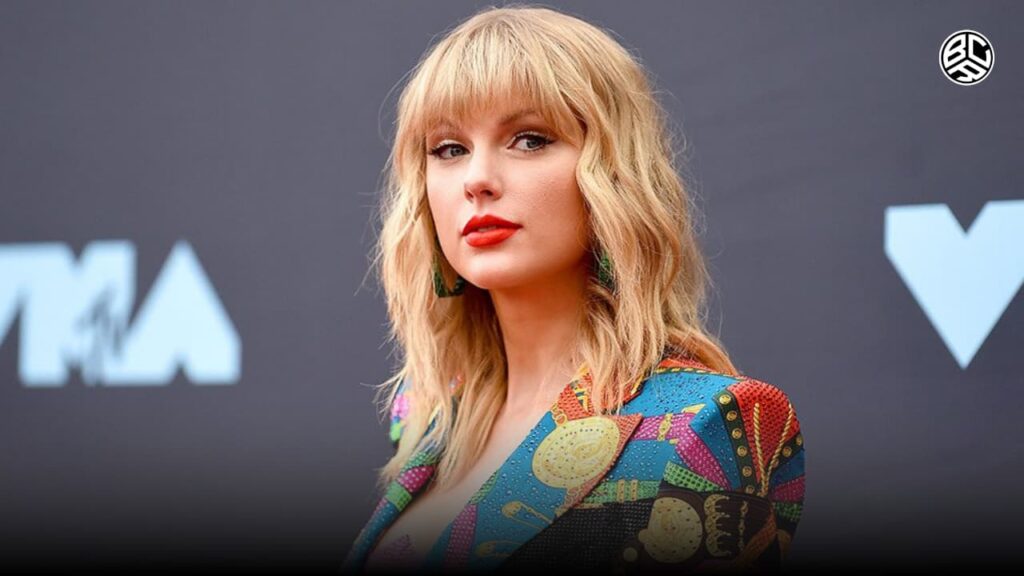
In a move that reflects the growing tension between celebrity identity and rapidly advancing artificial intelligence, Taylor Swift has taken a new legal step aimed at curbing the spread of deepfake content that imitates her voice and image.
Recent filings submitted through her company to the United States Patent and Trademark Office show that Swift is seeking trademark protection for distinctive elements of her identity, including recognizable voice phrases such as “Hey, it’s Taylor Swift” and “Hey, it’s Taylor.” The applications also include a detailed visual depiction tied to her stage persona, reflecting an effort to formally define aspects of her likeness within existing legal frameworks.
The strategy marks a notable shift in how public figures are responding to the rise of AI-generated content. While copyright law traditionally protects recorded music and original works, it does not fully extend to synthetic recreations generated by artificial intelligence. This gap has allowed increasingly realistic imitations of voices and appearances to circulate online, often without clear legal recourse.
Swift’s decision appears to be shaped by recent incidents in which AI-generated material falsely portrayed her in advertisements, political messaging, and other misleading contexts. The technology behind such content has evolved quickly, enabling voice cloning and visual replication that can be difficult for audiences to distinguish from authentic material. In some cases, these deepfakes have been linked to scams and misinformation campaigns, raising broader concerns about consumer deception and reputational harm.
Legal experts describe the use of trademarks in this context as an emerging and largely untested approach. Unlike copyright, trademark law focuses on preventing confusion in the marketplace, particularly when a name, phrase, or image is closely associated with a specific individual or brand. By securing rights over identifiable elements of her voice and likeness, Swift may be positioning herself to challenge unauthorized uses that could mislead the public into believing content is genuine or endorsed.
However, the outcome remains uncertain. The applications are still pending, and questions persist about how effectively trademark protections can be applied to AI-generated speech or imagery. Some analysts note that courts have yet to fully address whether short voice phrases or stylistic elements can meet the threshold for enforceable trademarks in this context.
Even so, the move is being closely watched across the entertainment industry, where concerns over digital impersonation are becoming increasingly urgent. As artificial intelligence continues to blur the line between real and synthetic expression, Swift’s legal push highlights a broader effort to reclaim control over identity in an environment where replication is easier than ever.
Discover Also Megan Thee Stallion Triumphs on Broadway Amidst Breakup Drama

M Adnan Akram is the founder and lead writer at Back Casting Room, where he covers celebrity biographies, family histories, and the lesser-known figures behind well-known names. His work focuses on separating verified public information from speculation, drawing on publicly available records, interviews, and credible reporting to build accurate, well-researched profiles.
With a particular interest in entertainment and pop culture, Adnan writes about everything from celebrity net worth breakdowns to the private individuals connected to famous names, the spouses, family members, and background figures whose stories rarely get told in full.
At Back Casting Room, the goal is straightforward: give readers accurate, well-sourced information without the clickbait or unverified claims that often surround celebrity-adjacent stories.