
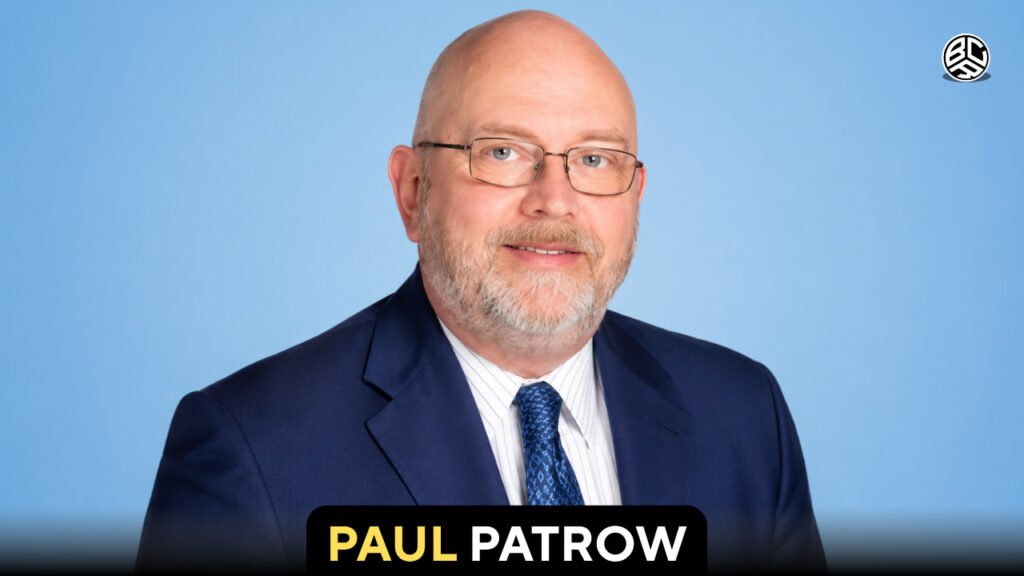
Not every influential legal career generates headlines. Some of the most consequential work in corporate law happens in conference rooms and deal documents rather than courtrooms, and the attorneys doing that work are known primarily within the industries they serve rather than to the general public. Paul D. Patrow fits that profile precisely as a San Francisco-based tax attorney with over two decades of experience advising private equity firms, hedge funds, venture capital investors, and companies navigating complex transactions.
His career has taken him through some of the most respected law firms in the United States, and his practice represents a specialized corner of legal work that most people encounter only indirectly through the transactions his clients make.
Quick Summary
| Category | Details |
|---|---|
| Full Name | Paul D. Patrow |
| Profession | Tax and corporate attorney |
| Current Position | Senior Tax Counsel |
| Current Firm | Shartsis Friese LLP |
| Industry | Corporate law and taxation |
| Experience | 20+ years |
| Main Expertise | M&A tax, private equity, hedge funds, venture capital |
| Education | J.D., University of Chicago Law School |
| Undergraduate Degree | B.A., University of Minnesota Duluth |
| Previous Firms | Kirkland & Ellis, Paul Hastings, Faegre Drinker Biddle & Reath |
| Office Location | San Francisco, California, USA |
| Bar Admission | Illinois |
| Known For | Transactional tax structuring and investment fund advisory |
| Public Profile | Mostly private professional background |
| Current Focus | Corporate transactions and tax planning |
Education: A Foundation in Elite Legal Training
Paul Patrow’s academic credentials reflect deliberate preparation for a demanding specialty.
He earned his Bachelor of Arts degree in 1996 from the University of Minnesota Duluth, a solid regional institution with a strong undergraduate program. His law degree came from a considerably more prominent source: the University of Chicago Law School, where he earned his Juris Doctor in 2000.
The University of Chicago Law School carries a particular reputation within the legal world. It’s consistently ranked among the top handful of law schools in the United States and is especially known for its emphasis on the intersection of law and economics, a framework that shapes how its graduates think about legal problems, particularly in areas like tax, corporate transactions, and financial regulation. For someone specializing in transactional tax law, that intellectual foundation is directly relevant to the kind of analytical work the practice requires.
A Career Built Across Major Firms
Paul Patrow’s professional trajectory has taken him through a series of significant law firm placements, each representing a different stage of his career development.
His early career included work at Kirkland & Ellis, one of the most powerful and profitable law firms in the world. Kirkland has dominant practices in private equity, corporate law, and tax, making it one of the most relevant platforms for someone developing expertise in fund formation and transactional tax structuring. Reaching partner level at Kirkland is a significant professional accomplishment, reflecting both technical skill and the ability to develop and maintain institutional relationships.
He subsequently moved to Thompson Coburn LLP in 2014 before joining Faegre Baker Daniels in 2016 as a partner. After a period at Paul Hastings another firm with a prominent tax and private equity practice he rejoined Faegre Drinker Biddle & Reath in 2023 before making his most recent move.
In November 2024, Patrow joined Shartsis Friese LLP as Senior Tax Counsel, bringing what the firm described as more than two decades of tax law experience to their San Francisco office. Shartsis Friese is a San Francisco-based firm known for its work in private equity, venture capital, and investment management, a natural fit for Patrow’s practice and client base.
What Transactional Tax Law Actually Involves
For anyone unfamiliar with this corner of legal practice, understanding what Paul Patrow actually does requires a brief explanation of what transactional tax attorneys handle.
When companies merge, when private equity firms acquire businesses, when investment funds are formed, when venture capitalists structure deals with startups all of these transactions have tax consequences that can significantly affect the economics of the deal. A bad tax structure can cost clients tens of millions of dollars. A well-designed one can preserve value, defer liability, or create efficiencies that make otherwise marginal transactions viable.
Transactional tax attorneys work at the intersection of deal-making and tax law, typically alongside corporate lawyers, investment bankers, and financial advisors. They aren’t filing tax returns, they’re designing the structures that determine how transactions are characterized for tax purposes before and after they close.
Private Equity and Hedge Funds
A significant portion of Patrow’s practice centers on investment fund work. This includes advising on the formation of private equity and hedge funds, the legal and tax structures that govern how these vehicles are organized, how capital is contributed and distributed, and how carried interest and management fees are structured.
Fund managers and institutional investors care deeply about these structures because the tax treatment of fund economics directly affects investor returns and management compensation. Getting this work right requires deep familiarity with partnership tax law, securities regulations, and the specific preferences of different categories of institutional investors.
Mergers and Acquisitions
On the M&A side, Patrow advises on tax-efficient acquisition structures, how buyers and sellers structure transactions to minimize unnecessary tax leakage. Whether a deal is structured as a stock purchase, an asset purchase, a merger, or a more complex reorganization can have dramatically different tax consequences for both parties. Identifying the optimal structure and navigating the competing interests of buyers and sellers in that negotiation is central to his practice.
Venture Capital and Startup Transactions
His practice also extends to venture capital working with investors and founders on the tax dimensions of equity raises, investment structures, and the mechanics of how startup equity is treated as companies grow, dilute, and eventually exit through sale or IPO. For founders and early investors, understanding the tax implications of different equity structures can have major long-term consequences.
Where He Practices and Professional Context
Patrow works from San Francisco, California, the center of the venture capital and technology investment universe, though he is licensed as an attorney in Illinois rather than California. His practice at Shartsis Friese operates in an environment where his client base and areas of expertise are immediately relevant to the firm’s institutional focus.
His professional profile, as it exists in publicly available sources, is almost entirely oriented toward his technical practice and his client service. Unlike some attorneys who cultivate public profiles through media commentary, speaking engagements, or litigation that generates press coverage, Patrow’s work happens in the transactional world deals that close quietly and clients who prefer it that way.
Personal information age, family background, political affiliation, or net worth is not available through public sources, which is entirely consistent with the profile of a corporate transactional attorney whose work product is confidential and whose professional life is defined by client relationships rather than public visibility.
What His Career Represents
Paul Patrow’s career trajectory illustrates what long-term success in elite legal practice looks like in a specialty that doesn’t get much public attention. A University of Chicago law degree, partnership at Kirkland & Ellis, and subsequent work at multiple prominent firms across more than two decades is a career profile that commands genuine respect within legal and financial circles.
The clients who seek out this kind of expertise: private equity firms structuring billion-dollar acquisitions, venture capital funds organizing their next raise, hedge funds navigating the tax implications of complex trading strategies are working with someone whose technical knowledge directly affects the outcomes they care most about.
That’s not a profile that generates celebrity, but it’s one that generates sustained demand for skilled, experienced work.
Conclusion
Paul Patrow’s biography is the story of a career built on technical mastery in a field where precision matters enormously. From his University of Chicago law education through two decades of practice at some of the most respected firms in U.S. corporate law, he has built a reputation as a transactional tax specialist whose expertise serves the private equity, hedge fund, and venture capital communities that shape significant portions of the American economy.
His current position at Shartsis Friese represents both continuity and a natural next chapter: a San Francisco base, a firm aligned with his practice areas, and a continued focus on the deal-making world where his work makes a measurable difference.
Discover Also Edward Joseph O’Donnell: The Navy Admiral Who Commanded Guantanamo During the Cuban Missile Crisis

M Adnan Akram is the founder and lead writer at Back Casting Room, where he covers celebrity biographies, family histories, and the lesser-known figures behind well-known names. His work focuses on separating verified public information from speculation, drawing on publicly available records, interviews, and credible reporting to build accurate, well-researched profiles.
With a particular interest in entertainment and pop culture, Adnan writes about everything from celebrity net worth breakdowns to the private individuals connected to famous names, the spouses, family members, and background figures whose stories rarely get told in full.
At Back Casting Room, the goal is straightforward: give readers accurate, well-sourced information without the clickbait or unverified claims that often surround celebrity-adjacent stories.