
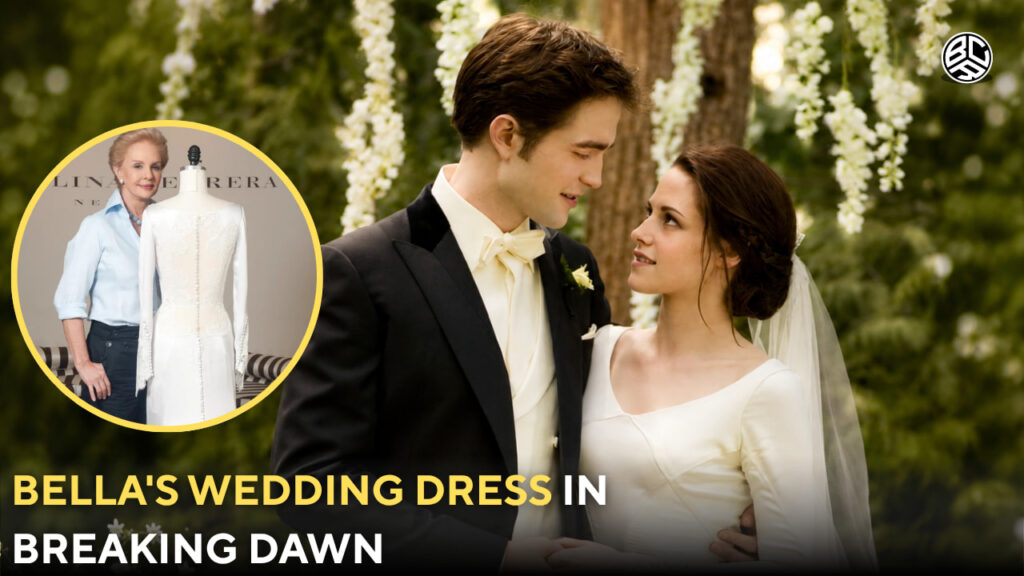
Few movie wedding dresses have generated the kind of lasting fascination that Bella Swan’s gown did when Breaking Dawn Part 1 arrived in 2011. Twilight fans had waited through four films for this moment, and the dress had to be delivered. It did and then some. Designed by Carolina Herrera, personally selected by author Stephenie Meyer, and constructed over six months by four seamstresses, the gown became one of the most discussed pieces of film costuming in recent memory.
The Designer: Why Carolina Herrera?
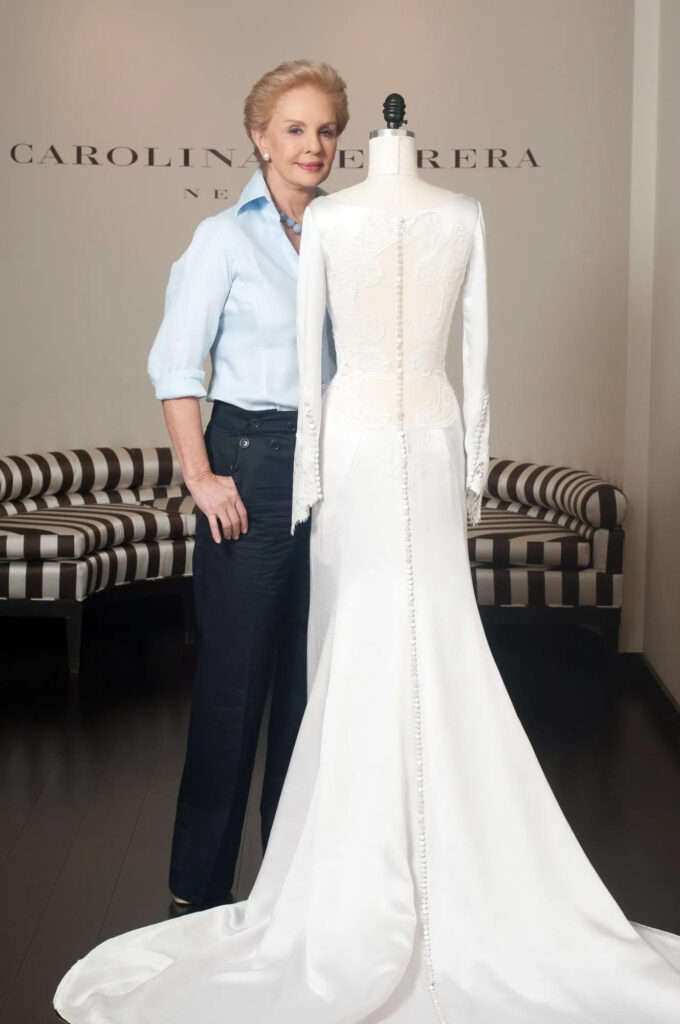
The choice of designer was not left to a costume department or a studio committee. Stephenie Meyer made the call herself, and she chose Carolina Herrera, one of fashion’s most respected figures and, as it turned out, a genuine fan of the Twilight series.
“Being a big follower of The Twilight Saga, I was very flattered to be a part of this fantastic project,” Herrera told Vogue. She had read the books and seen the first film before she ever picked up a sketch pad for the project.
Meyer’s reasoning was straightforward: “My favorite designer, Carolina Herrera, did the wedding dress. I wanted the dress to be something special, not something that you’re going to see every day.”
Herrera has dressed some of the most recognizable women in Hollywood, including Renée Zellweger, Mariska Hargitay, and Christina Hendricks. Entrusting Bella’s gown to her elevated the moment from film costume to genuine fashion event.
Design Inspiration: Novel Meets Herrera
The brief Herrera worked on came directly from Meyer’s description in the book. In the novel, Bella’s dress is described as antique-inspired, evoking the early 1900s a deliberate nod to the era when Edward was still human. The dress had to feel timeless while still reading as contemporary on screen.
Herrera threaded that needle carefully. “I was of course inspired by Stephenie’s description of the gown in the book,” she explained, “but I added the touch of Herrera and also took into consideration the personality and the style of the bride.”
The result was a gown that honored the novel’s vision without simply illustrating it romantic and vintage in spirit, but unmistakably refined in execution.
The Construction: Every Detail Counted
Fabrics and Materials
The dress was built from two primary materials: crepe satin and French Chantilly lace. Herrera described it in detail: a slight V-neckline that revealed just enough collarbone, two front inserts with beautiful silk thread topstitching, and a back that was oval-shaped with a Chantilly lace border veiled in tulle.
“It’s very romantic,” Herrera said, “and when all the details come together, it creates a vision specific to Bella’s style and personality.”
The Buttons
One of the most talked-about details was the buttons. Bella’s gown featured 152 covered buttons running down the back, a detail lifted directly from Meyer’s novel along with 17 buttons on each sleeve. The long sleeves themselves were finished in additional lace, adding to the dress’s layered, antique sensibility.
Time and Labor
The gown took six months to complete and required four seamstresses working throughout that period. The finished dress was valued at approximately $35,000, a figure that reflects both the quality of materials and the extraordinary level of handcraft involved.
Kristen Stewart’s Reaction
The moment Kristen Stewart first put on the dress has become one of the more memorable anecdotes from the film’s production.
Herrera recalled: “When she initially put on the dress and looked over her shoulder into the mirror, she was very moved. In that moment she was not an actress or a character in a film but instead a bride, and a happy one at that.”
Stewart’s own feelings about the gown have not dimmed over time. She later told Who What Wear: “I love that dress so much. I think if I were to ever do a classic wedding dress, this is kind of the one.”
The Complete Look: Shoes and Accessories
Bella’s accessories were intentionally minimal, which made each piece more meaningful. Her shoes were Manolo Blahnik’s “Swan” embellished satin pumps priced at $1,295 with a crystal-beaded vine appliqué across the vamp designed to evoke a swan’s graceful form.
Her only other accessories were a hair comb from her grandmother (with sapphires added by her parents as her “something blue”), her engagement ring, and an all-white bouquet. No earrings, no necklace, no bracelet. The restraint was entirely deliberate, keeping the focus on the dress itself.
The Replica: Making It Accessible
For brides who fell in love with the gown, Alfred Angelo produced an officially licensed replica under the name Style #8400, available in white or ivory and in sizes 0 to 30WW, priced at $799. The replica was created in collaboration with Summit Entertainment, the studio behind the Twilight films, giving fans a wearable version of one of cinema’s most iconic wedding looks.
Conclusion
Bella’s wedding dress in Breaking Dawn succeeded because everyone involved took it seriously. Stephenie Meyer chose her favorite designer. Carolina Herrera honored the source material while making it genuinely beautiful. Four seamstresses spent six months on it. And Kristen Stewart wore it in a way that made even the designer forget she was watching a film set.
The result was a gown that outlasted the movie cycle it was made for, still referenced by brides, still discussed by fashion writers, still considered one of the most beautifully realized costumes in modern cinema.
Note: All details are based on publicly reported statements from the designers and production teams involved in Breaking Dawn Part 1.
Discover Also Beyonce Wedding Dress: The Story Behind the Gown

M Adnan Akram is the founder and lead writer at Back Casting Room, where he covers celebrity biographies, family histories, and the lesser-known figures behind well-known names. His work focuses on separating verified public information from speculation, drawing on publicly available records, interviews, and credible reporting to build accurate, well-researched profiles.
With a particular interest in entertainment and pop culture, Adnan writes about everything from celebrity net worth breakdowns to the private individuals connected to famous names, the spouses, family members, and background figures whose stories rarely get told in full.
At Back Casting Room, the goal is straightforward: give readers accurate, well-sourced information without the clickbait or unverified claims that often surround celebrity-adjacent stories.