
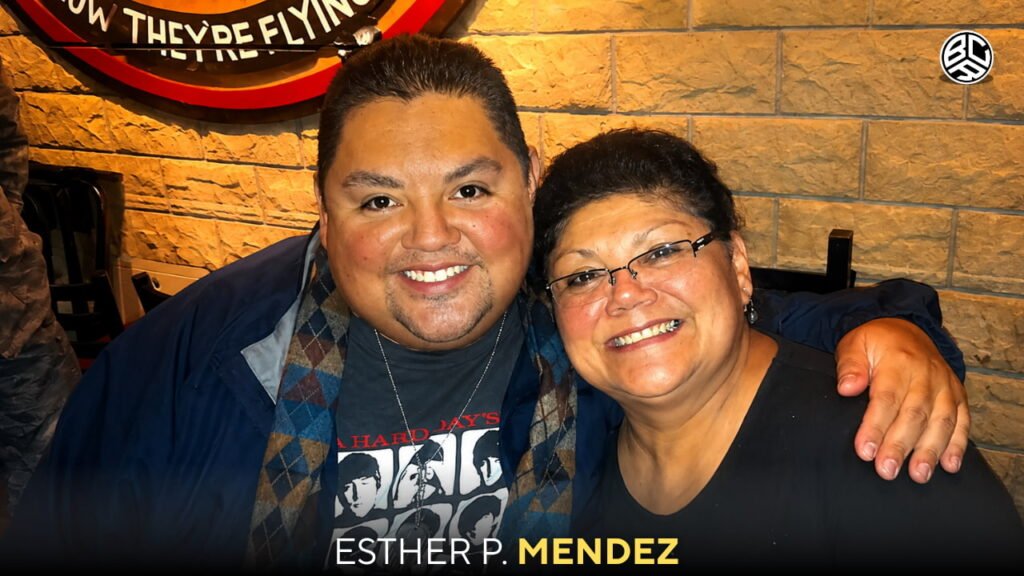
Behind every comedian who tells stories about growing up, there is usually someone at the center of those stories. For Gabriel Iglesias known to millions as “Fluffy,” one of America’s most beloved stand-up comedians, that person is his mother, Esther P. Mendez.
She was not a celebrity. She was not a public figure in any conventional sense. She was a Mexican-American woman who raised six children largely on her own in California, navigated real financial hardship with grace and humor, and somehow managed to instill in her youngest son the values that would eventually fill arenas across the country.
Esther Piñuelas Mendez died on May 1, 2012, at the age of 77, in West Covina, California. But she has not left Gabriel’s work or his audience’s imagination since.
Quick Summary
| Category | Details |
|---|---|
| Full Name | Esther Piñuelas Mendez |
| Known For | Mother of comedian Gabriel Iglesias |
| Born | August 25, 1934 |
| Birthplace | California, USA |
| Died | May 1, 2012 |
| Age at Death | 77 |
| Nationality | American |
| Ethnicity | Mexican-American |
| Spouse | Jesús Iglesias (separated) |
| Children | Six, including Gabriel Iglesias |
| Burial | Rose Hills Memorial Park, Whittier, California |
| Legacy | Remembered for raising Gabriel Iglesias and inspiring many of his comedy routines. |
Who Was Esther P. Mendez?
Esther P. Mendez was born on August 25, 1934, in California. She was a Mexican-American woman who, by the time she was raising her children, was doing so largely alone. After separating from her husband, Jesús Iglesias, she took on the full weight of parenthood for six children Gabriel the youngest among them.
The financial circumstances were real and difficult. Gabriel has spoken openly in his stand-up routines and interviews about growing up in government-assisted housing, about the constraints of a tight budget, and about what it meant to have a mother who found ways to make it work anyway. Esther did not have the luxury of ease, and she never pretended otherwise.
What she did have was humor, resilience, and a particular way of seeing the world that her son absorbed so completely it became the foundation of his career.
Raising Six Children Alone
Single parenthood is demanding under any circumstances. Single parenthood of six children, on a limited income, in the circumstances Esther navigated, is something else entirely.
She separated from Jesús Iglesias and continued raising her family without the financial or practical support that a two-parent household provides. Gabriel has described this period of his childhood with both honesty and warmth not as a tale of victimhood, but as the story of a woman who simply got on with it.
Her approach to parenting, by Gabriel’s account, emphasized humility. She consistently encouraged him to stay grounded, to remember where he came from, and not to let success change who he was at his core. That message delivered not once but throughout his upbringing became one of the defining threads of his comedy. The self-awareness, the warmth, the refusal to punch down: these are qualities that trace directly back to what his mother taught him.
The Woman Who Became a Character in Her Son’s Stories
One of the most unusual things about Esther P. Mendez is that she became known to millions of people without ever appearing on a stage or in front of a camera.
Gabriel Iglesias has spent decades telling stories about his mother. Her humor, her responses to difficult situations, her parenting instincts, her personality these appear again and again across his stand-up specials, in ways that audiences who have never met her somehow recognize and respond to. She is a recurring presence in his work, drawn with enough specificity that she feels real rather than archetypal.
That is not an accident. Gabriel has said that many of the stories he tells about his childhood come directly from her, and that her sense of humor was one of his earliest models. A comedian who grew up watching a parent find lightness in hard circumstances learns something that no writing room can teach: that humor is not a performance but a survival skill, and that the best comedy comes from telling the truth about real life.
Her Influence on His Comedy and Career
Esther’s influence on Gabriel’s professional life was not limited to inspiration. She was a presence during the early years of his career as he worked to establish himself at a time when many aspiring comedians quietly disappear because the path is too long and the rewards too uncertain.
Her support during that period matters in ways that are difficult to quantify but easy to understand. Having someone who believes in what you are doing, especially a parent, changes the calculus of risk. It makes it easier to keep going.
Gabriel has described her support as consistent and genuine, not the contingent kind that depends on results, but the kind that simply shows up because the person loves you.
Loss and Legacy
Esther Piñuelas Mendez died on May 1, 2012, in West Covina, California. She was 77. She was buried at Rose Hills Memorial Park in Whittier, California.
Gabriel Iglesias has spoken publicly about the grief of losing her the particular, complicated grief of losing a parent who was also a foundational influence. In the years since her death, she has continued to appear in his work: in references, in stories, in the values that still structure how he approaches his comedy and his life.
That kind of presence after death is not something you can manufacture. It is the natural consequence of being someone who mattered deeply to another person and of that person choosing, again and again, to keep telling the world about you.
Conclusion
Esther P. Mendez never sought the spotlight. She raised her children, maintained her humor through real adversity, and encouraged her youngest son to be humble and true to himself. She did not live to see the full scope of what he built, though she was there for the beginning of it.
Gabriel Iglesias has said that many of his stories come from her. In a real sense, so does much of who he is: the warmth, the accessibility, the refusal to take himself too seriously even as the venues got bigger and the audiences grew.
She was a comedian. In doing so, she shaped the experiences of millions of people who laughed along without ever knowing her name. They know it now.
Discover Also Mark Hartman: Father of Sam Hartman

M Adnan Akram is the founder and lead writer at Back Casting Room, where he covers celebrity biographies, family histories, and the lesser-known figures behind well-known names. His work focuses on separating verified public information from speculation, drawing on publicly available records, interviews, and credible reporting to build accurate, well-researched profiles.
With a particular interest in entertainment and pop culture, Adnan writes about everything from celebrity net worth breakdowns to the private individuals connected to famous names, the spouses, family members, and background figures whose stories rarely get told in full.
At Back Casting Room, the goal is straightforward: give readers accurate, well-sourced information without the clickbait or unverified claims that often surround celebrity-adjacent stories.