
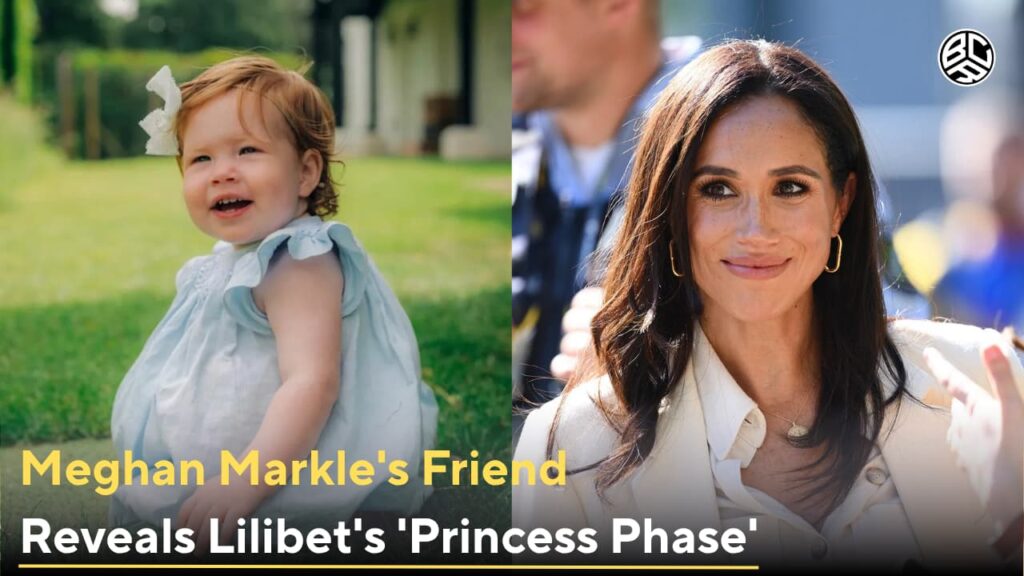
Most information that emerges about the Sussex children comes through carefully managed channels, if it comes at all. Prince Harry and Meghan Markle have been protective of their children’s privacy in a way that is both understandable and, at times, almost total. Which is why a small personal detail shared by one of Meghan’s friends in January 2025 landed with the kind of warmth that genuinely candid glimpses tend to produce.
The detail was this: Lilibet, the younger Sussex child and a real princess by title, is apparently going through a princess phase, the classic childhood stage where young girls become fascinated by princess stories, dress-up, and all the imaginative play that comes with it. Coming from someone who had met the family directly and shared the story with genuine affection, it read less like a royal update and more like something you might hear from any parent talking about their three-year-old.
Who Shared the Story and Why It Felt Credible
The anecdote came from chef Adrian Lipscombe, who posted a personal account of meeting Meghan and having a conversation with her. Lipscombe is not a tabloid source or an unnamed insider; she is someone who had a direct interaction with Meghan and chose to share what she experienced publicly.
In her account, Lipscombe described a conversation in which she and Meghan talked about their daughters both being in a princess phase and the movies they were enjoying. It was a specific, grounded detail of the kind that tends to ring true precisely because it is so ordinary. Two mothers talking about their children’s current obsessions is one of the most universal parenting conversations there is.
Lipscombe also described Meghan and Harry as down-to-earth and kind in person, noting that Meghan was engaged and gracious even in a busy setting. The overall picture was of a family that, whatever else surrounds them publicly, manages to have ordinary conversations about their children just like everyone else.
The Irresistible Detail: A Real Princess in a Princess Phase
The reason this particular story caught attention so quickly is not hard to understand. Lilibet Diana
Mountbatten-Windsor was born on June 4, 2021, in California. She became entitled to use the title Princess following the accession of her grandfather, King Charles III, in 2022, which makes her a princess in the most official sense possible.
And she is, by all accounts, fascinated by princesses.
The overlap between her real title and her childhood obsession is the kind of coincidence that writes its own headline, and the warmth of it comes through clearly in how it was reported. There is something genuinely sweet about a child who happens to be a princess going through the same princess phase that millions of children her age experience every year, watching the same films, wanting the same costumes, entirely unaware of or at least uninterested in the difference between the fictional versions and her own situation.
What a Princess Phase Actually Is
For anyone unfamiliar with the term, the princess phase is a well-recognised childhood developmental stage, particularly common among girls aged two to six. It typically involves strong interest in princess characters from animated films, an enthusiasm for princess-themed clothing and accessories, and elaborate imaginative play centred on castles, royalty, and story.
Child development researchers and psychologists have discussed the phrase extensively, noting that it often reflects children processing ideas about identity, power, beauty, and narrative through a cultural framework they find appealing. It is extremely common and generally considered a normal and passing stage of childhood imagination.
Lilibet is three years old and, by her mother’s own account to a friend, fully immersed in it. Which, developmental context aside, is simply a very relatable thing to hear about anyone’s child.
The Sussex Children and What We Do and Don’t Know
Prince Archie Harrison Mountbatten-Windsor, born in May 2019, and Lilibet Diana, born in June 2021, have been raised in California with a notable degree of privacy around the specifics of their daily lives. They have appeared in a very limited number of public photographs and almost no filmed footage. Harry and Meghan have spoken about their children in general terms in interviews but have consistently maintained that the children themselves should not be public figures by virtue of their parents’ choices.
That approach has frustrated some royal watchers and been respected by others. What it means in practice is that small, genuine insights like the one Lipscombe shared carry unusual weight, because they are among the very few first-hand accounts of the children as actual children rather than as symbols in a larger public narrative.
Why This Story Resonated
The coverage of the anecdote was largely warm and uncomplicated, which is relatively rare in the context of Sussex media coverage. There was nothing controversial in the details. A child is in a princess phase. Her mother talked about it with a friend. The friend shared the conversation.
What made it resonate was the straightforward humanity of it. Lilibet is growing up in California, going to the same princess movies that every other child her age is watching, developing the same enthusiasms, and having her interests noted by a mother who mentioned them casually in conversation. That is as normal as childhood gets, and in the context of children whose lives carry an unusual amount of symbolic weight, normal is genuinely refreshing to hear about.
Conclusion
A small story about a child’s favourite subject became, briefly, one of the most-read pieces of Sussex family news of early 2025 not because it was dramatic or controversial, but because it was the opposite. A real princess in a princess phase, described by someone who met her mother and found two parents talking about their children the way parents everywhere do.
It is a reminder that behind the titles, the headlines, and the ongoing public narratives, there are two young children growing up with the same enthusiasms, phases, and ordinary moments that childhood everywhere involves. Lilibet’s current favourite subject just happens to be unusually well-matched to her actual situation.
Discover Also Jane Stuart: The Actress and Former Wife of Kevin Dillon

M Adnan Akram is the founder and lead writer at Back Casting Room, where he covers celebrity biographies, family histories, and the lesser-known figures behind well-known names. His work focuses on separating verified public information from speculation, drawing on publicly available records, interviews, and credible reporting to build accurate, well-researched profiles.
With a particular interest in entertainment and pop culture, Adnan writes about everything from celebrity net worth breakdowns to the private individuals connected to famous names, the spouses, family members, and background figures whose stories rarely get told in full.
At Back Casting Room, the goal is straightforward: give readers accurate, well-sourced information without the clickbait or unverified claims that often surround celebrity-adjacent stories.