
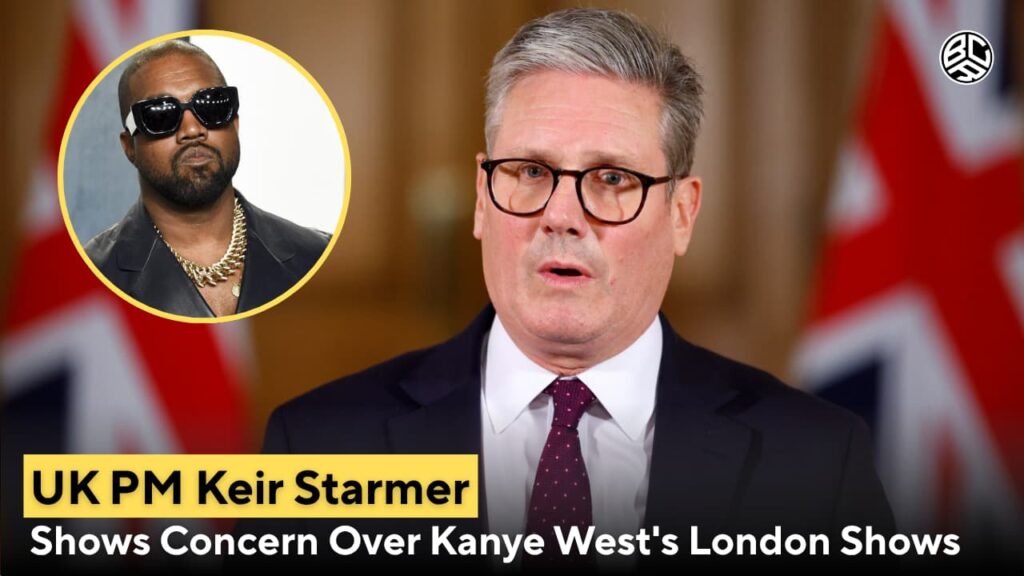
The controversy surrounding Kanye West’s planned headline performances at the Wireless Festival has drawn a measured but firm response from British Prime Minister Keir Starmer, who described the situation as “deeply concerning,” reflecting a broader unease across political, cultural, and corporate circles.
West, also known as Ye, is currently scheduled to headline all three nights of the festival in London’s Finsbury Park in July 2026. The announcement, which might ordinarily signal a major cultural moment for one of hip-hop’s most influential figures, has instead become a focal point of national debate. The concern stems not from the scale of the performances, but from the artist’s recent history of antisemitic remarks and public statements that have been widely condemned.
Speaking publicly, Starmer emphasized that antisemitism must be confronted “clearly and firmly,” underscoring the responsibility of public institutions and event organizers to consider the wider social impact of such bookings. His comments echo those of community leaders and advocacy groups, including prominent Jewish organizations, which have argued that hosting West risks normalizing rhetoric they describe as harmful and dangerous.
The response has extended beyond political statements. Major corporate sponsors, including global brands such as Pepsi and Diageo, have withdrawn their support from the festival following the announcement. Their decisions signal not only reputational concerns but also the tangible financial implications of the growing backlash. In parallel, there have been increasing calls from political figures and advocacy groups to deny West entry into the United Kingdom under existing provisions that allow exclusion on grounds of public good.
London Mayor Sadiq Khan has also distanced the city’s administration from the event, noting that the views expressed by West do not align with the values London seeks to uphold. Meanwhile, reports indicate that other potential venues, including Tottenham Hotspur Stadium, had previously declined to host similar performances, citing sensitivities linked to their historical ties with Jewish communities.
For his part, West has issued apologies in the past and attributed some of his behavior to mental health struggles, including bipolar disorder. However, these statements have not fully stemmed criticism, and skepticism remains among both officials and the public.
As it stands, the performances remain scheduled, with festival organizers yet to announce any changes. The situation continues to evolve, balancing questions of artistic freedom against broader societal responsibilities, and leaving open whether the concerts will proceed as planned or become another flashpoint in an already contentious cultural moment.
Discover Also Selena Gomez Pregnancy Rumors Go Viral

M Adnan Akram is the founder and lead writer at Back Casting Room, where he covers celebrity biographies, family histories, and the lesser-known figures behind well-known names. His work focuses on separating verified public information from speculation, drawing on publicly available records, interviews, and credible reporting to build accurate, well-researched profiles.
With a particular interest in entertainment and pop culture, Adnan writes about everything from celebrity net worth breakdowns to the private individuals connected to famous names, the spouses, family members, and background figures whose stories rarely get told in full.
At Back Casting Room, the goal is straightforward: give readers accurate, well-sourced information without the clickbait or unverified claims that often surround celebrity-adjacent stories.