
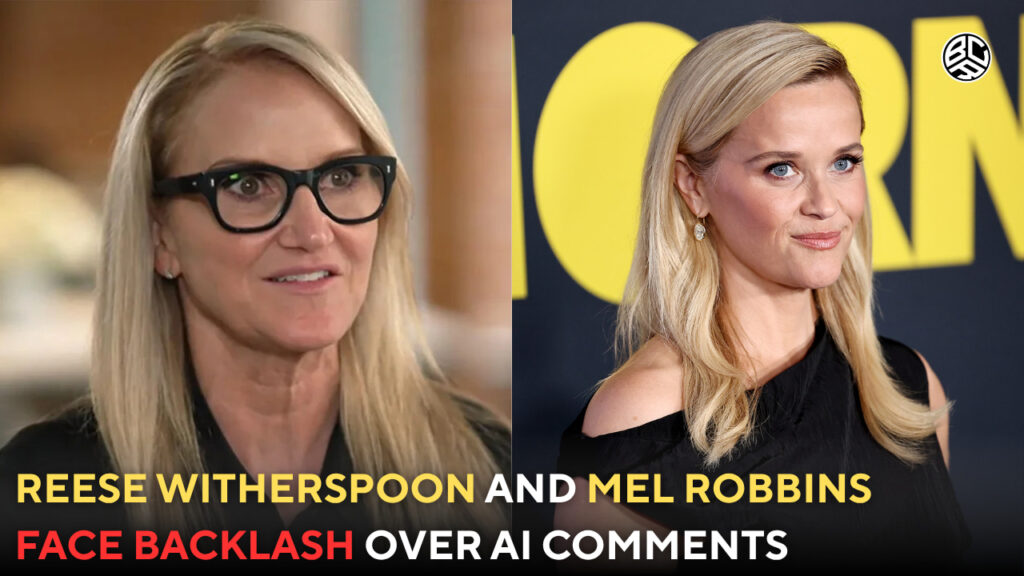
Actress and producer Reese Witherspoon, alongside bestselling author and motivational speaker Mel Robbins, is facing growing public criticism after recent comments about artificial intelligence sparked intense debate online. What began as conversations encouraging people, particularly women, to become more familiar with AI technology quickly evolved into a wider cultural argument about trust, job security, privacy, and the uneasy pace of technological change.
The backlash first intensified after Reese Witherspoon shared a video on social media discussing the importance of understanding artificial intelligence tools such as ChatGPT and Claude. Speaking directly to followers, Witherspoon explained that many women she had recently spoken with were not actively using AI platforms, and she expressed concern that this gap could eventually leave women behind professionally as workplaces continue changing rapidly.
Her comments were framed as encouragement rather than promotion. Witherspoon argued that learning the basics of AI now could help people adapt to future shifts in business, media, education, and communication. She also referenced reports suggesting women may be disproportionately affected by automation while simultaneously using AI technologies less frequently than men.
But the reaction online was immediate and deeply divided.
Critics accused the actress of overlooking the fears many workers already have about artificial intelligence replacing jobs across creative and office industries. Writers, artists, actors, designers, and educators responded across social media platforms, arguing that AI systems are already disrupting careers and reducing opportunities for human creativity. Others raised environmental concerns surrounding the enormous energy demands required to operate large AI systems and data centers.
As criticism spread, Witherspoon later clarified her position publicly. She stated that she was not being paid by any technology company and insisted her comments were not intended to dismiss legitimate concerns surrounding AI. In follow-up posts, she acknowledged fears about privacy, job displacement, and the broader risks associated with rapidly advancing technology. She also emphasized that she does not believe machines should replace human creativity or human connection.
At nearly the same time, Mel Robbins found herself facing separate criticism after encouraging followers to use AI tools to better organize and understand their personal finances. According to online reactions, many viewers became concerned after Robbins suggested uploading financial information into AI systems for guidance and analysis. Privacy advocates and cybersecurity experts quickly warned that sharing sensitive banking or tax-related documents with AI platforms could create security risks if users do not fully understand how their data may be stored or processed.
Together, the two controversies have become part of a much larger public conversation now unfolding far beyond Hollywood. For supporters, AI represents a tool people must learn in order to remain competitive in a changing world. For critics, however, the technology raises difficult ethical questions that cannot simply be solved through optimism or adaptation alone.
And perhaps that explains why these reactions have felt so emotional. Beneath the celebrity headlines and online arguments sits something deeper: a growing uncertainty about what the future of work, creativity, and even privacy may look like as artificial intelligence moves further into everyday life.
Discover Also French Actor Pierre Deny Passes Away

M Adnan Akram is the founder and lead writer at Back Casting Room, where he covers celebrity biographies, family histories, and the lesser-known figures behind well-known names. His work focuses on separating verified public information from speculation, drawing on publicly available records, interviews, and credible reporting to build accurate, well-researched profiles.
With a particular interest in entertainment and pop culture, Adnan writes about everything from celebrity net worth breakdowns to the private individuals connected to famous names, the spouses, family members, and background figures whose stories rarely get told in full.
At Back Casting Room, the goal is straightforward: give readers accurate, well-sourced information without the clickbait or unverified claims that often surround celebrity-adjacent stories.