

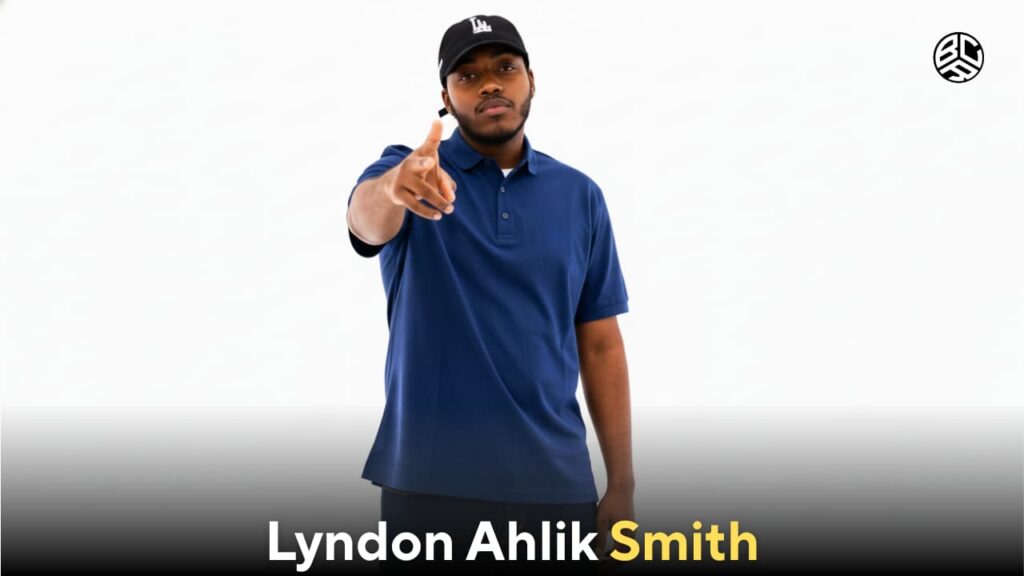
Some people enter public life gradually, through carefully managed introductions and polished debut moments. Others arrive all at once family drama, music career, legal headlines, and survival stories colliding in a way that makes it impossible to look away. Lyndon Ahlik Smith falls firmly into the second category.
Known to fans and followers as SAS, this Atlanta-born rapper and reality television personality became one of the more compelling figures to appear on Love & Hip Hop: Atlanta not because he chased the spotlight, but because his life kept pulling him into it. His story is one of music ambitions, deep family loyalty, near-fatal violence, and serious legal trouble, all woven together in a way that’s hard to separate from the city that shaped him.
Early Life in Atlanta
Born on June 2, 1993, in Atlanta, Georgia, Lyndon Ahlik Smith grew up in one of the most creatively fertile music environments in the country. Atlanta in the 1990s and early 2000s was a city building an empire in hip-hop from OutKast to T.I. to Gucci Mane, the sound of the South was being defined in real time, and kids who grew up in that atmosphere absorbed it deeply.
Smith was no exception. From an early age, his connection to music wasn’t just casual listening, it was personal and familial. His family had direct ties to the Atlanta rap scene in ways that made hip-hop not just an art form to admire but a genuine possibility to pursue.
He is a practising Muslim, a faith that has been a visible part of how he has spoken about his life in public moments, particularly during difficult periods.
The Family at the Center of It All
To understand SAS, you have to understand his family because his family is inseparable from his public narrative.
His mother is Karen King, known widely as “KK King,” a figure who became one of the more controversial personalities on Love & Hip Hop: Atlanta. His older brother is Will Cortez Robinson, better known by his stage name Scrapp DeLeon, a rapper whose career was significantly interrupted by a drug charge that sent him to prison for several years.
The brothers also had a notable family connection to the late rapper Dolla, a rising Atlanta artist who had signed to Akon’s Konvict Muzik and was generating real momentum before his death in 2009. That loss touched the family deeply and gave SAS’s music career a layer of personal weight that went beyond commercial ambition.
His father, Lyndon Baines Smith, is an estranged figure in the story present in the timeline but absent from the family in meaningful ways, which contributed to one of the most dramatic chapters of SAS’s life.
Music Career: Da Razkalz Cru and Beyond
SAS built his musical identity primarily through his membership in the Atlanta rap group Da Razkalz Cru, a collective that included his brother Scrapp DeLeon among its members. The group was part of the Atlanta underground scene and developed a following in regional hip-hop circles.
As a solo rapper, SAS released tracks that reflected the raw, unfiltered reality of Atlanta street life. His regional hit “I’m a Dog” established him as a genuine voice in local hip-hop not a manufactured product, but an artist with something to say and a delivery shaped by lived experience.
His music career gained a new platform when he began working with veteran producer Stevie J, which happened to coincide with his appearance on Love & Hip Hop: Atlanta. The collaboration was a meaningful step toward wider recognition, connecting him with one of the most experienced producers in the game and opening doors beyond Atlanta’s regional scene.
What stood out about SAS in the hip-hop landscape was authenticity. The Atlanta rap scene has always prized genuineness over polish, and his music reflected that ethos direct, emotionally grounded, and rooted in the specific realities of his upbringing.
Love & Hip Hop: Atlanta Three Seasons, Real Stories
SAS made his debut on Love & Hip Hop: Atlanta in Season 5 in 2016, joining the cast alongside his mother Karen King. His role was technically a supporting one, but the storylines attached to his family made him one of the more watched figures that season.
Unlike many cast members who leaned into manufactured drama, SAS was noted for staying focused on his music and his family. He appeared in a total of 20 episodes across Seasons 5, 7, and 8, returning in guest roles as the show continued. His brother Scrapp DeLeon later became a series regular in Season 8, keeping the family’s connection to the show alive across multiple seasons.
The show gave SAS visibility that purely musical channels hadn’t provided, introducing him to a national audience that extended far beyond Atlanta’s hip-hop community.
2012: The BridgeMill Incident
Before the television exposure, SAS was making headlines for very different reasons. In March 2012, his father Lyndon Baines Smith was severely beaten and found locked in the trunk of his own car, which had been driven from Georgia into Alabama. The victim was discovered during a routine traffic stop, with serious injuries including broken facial bones and broken ribs.
At the time, Lyndon Ahlik Smith was 23 years old. He was arrested in Miami in June 2012 and charged with kidnapping, aggravated assault, and battery. His younger brother Alonte was also arrested in connection with the same incident.
It was an extremely serious set of charges and an incident that drew significant media attention, particularly given the family dynamics involved.
However, SAS, along with his mother and brother, was eventually cleared of all charges. The legal resolution didn’t erase the headlines, but it did establish that the full picture of what happened was more complicated than the initial reporting suggested.
July 2016: Shot in the Head
Just as his television exposure was raising his public profile, SAS faced a life-threatening crisis that had nothing to do with cameras or music.
On July 2, 2016, he was shot in the back of the head in Phoenix, Arizona, where he had traveled to perform at a party. The details of the shooting including the identity of the shooter and the motive were not publicly confirmed at the time.
What followed was one of the more remarkable survival stories in recent Atlanta hip-hop history. From his hospital bed, SAS posted video and images to Instagram, showing fans the wound and speaking with characteristic directness about what had happened.
“The doctor just told me I got a bullet in the back of my head,” he said. “They said I got a thick skull. Y’all pray for me though. God got me. Allah got me. I ain’t tripping.”
He recovered fully. The combination of faith, resilience, and what his doctors literally described as an unusually thick skull saved his life. The incident added another chapter to a public story already packed with improbable moments.
2019: Trafficking Arrest
In October 2019, SAS faced his most serious legal situation yet. DeKalb County Police arrested Lyndon Ahlik Smith, then 26, alongside a man named James Ruffin on charges of criminal attempted trafficking and criminal attempted pimping. Authorities alleged the two men had planned to travel out of state with two teenage girls for the purpose of prostitution. Both teens were safely recovered by police.
The arrest was widely reported and represented a significant reputational crisis. The charges were serious involving the alleged exploitation of minors and the story spread quickly given his television profile.
The confirmed outcome of those legal proceedings has not been publicly documented in available sources, and any conclusions about conviction or resolution would require verified court records to confirm accurately.
Who SAS Is Beyond the Headlines
Underneath the turbulent public timeline is a clearer picture of who SAS has consistently presented himself to be: a family-first person, a Muslim man who credits his faith with carrying him through dangerous moments, a father, and an Atlanta rapper who takes his craft seriously.
On the television show, colleagues and producers noted that he was less interested in drama than in music and family stability. His on-screen persona was more grounded than many of his castmates, and his public statements including his response to being shot reflected a faith-rooted calm that was hard to dismiss as performance.
Conclusion
Lyndon Ahlik Smith’s story is genuinely difficult to summarize cleanly, because it contains serious harm alongside genuine resilience, musical ambition alongside significant legal trouble, and family loyalty alongside family tragedy.
What it doesn’t contain is indifference. Whether the moment was surviving a gunshot to the head, facing kidnapping charges that were ultimately dismissed, or building a rap career in one of the world’s most competitive music cities, SAS has engaged with his circumstances directly and openly.
Atlanta has produced more than its share of complicated hip-hop stories. His is one of the more textured ones unfinished, uneven, and very much his own.
Discover Also Isabella Brenda Lilja Foreman: George Foreman’s Daughter Living Life on Her Own Terms