
How five decades of record sales, songwriting royalties, and iconic tours built one of rock music’s most enduring financial legacies.
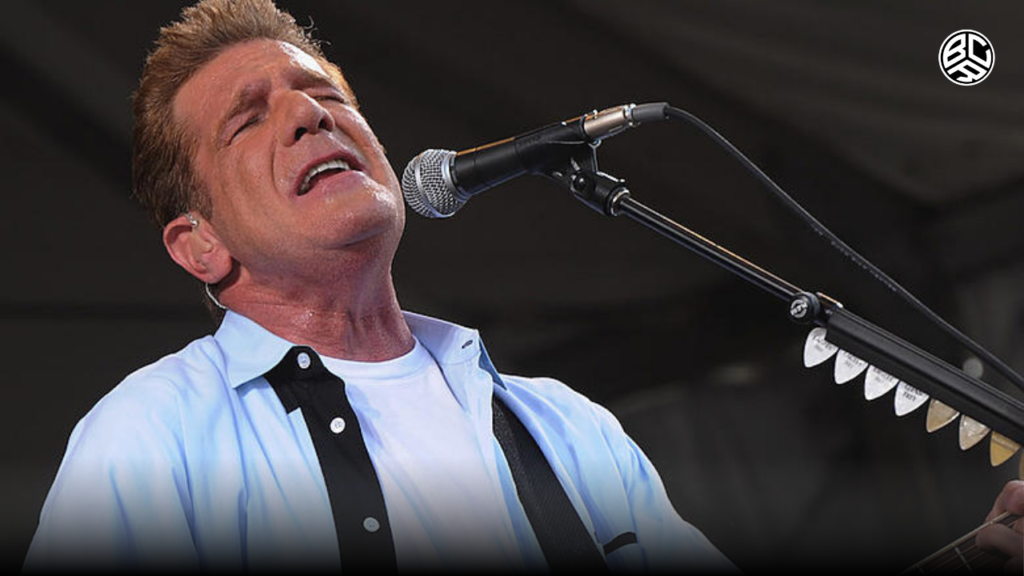
When people talk about Glenn Frey, they usually talk about the music first “Take It Easy,” “Lyin’ Eyes,” “Hotel California,” and a catalog of songs that defined a generation’s relationship with American rock and roll. But behind that artistic legacy is a financial story that is equally remarkable: a fortune built not on one lucky album or a single hot streak, but on decades of sustained commercial success, smart songwriting, and a band whose appeal proved almost impossibly durable.
At the time of his death in January 2016, Glenn Frey’s net worth is widely estimated at approximately $120 million. Understanding how that number came to be is really a story about how the music business works when everything goes right for a very long time.
Profile Summary
| Field | Details |
|---|---|
| Full Name | Glenn Lewis Frey |
| Date of Birth | November 6, 1948 |
| Place of Birth | Detroit |
| Date of Death | January 18, 2016 |
| Place of Death | New York City |
| Age at Death | 67 years |
| Nationality | American |
| Profession | Singer, Songwriter, Actor |
| Famous For | Founding member of Eagles |
| Genres | Rock, Country Rock |
| Years Active | 1967 – 2016 |
| Notable Album | Hotel California |
| Famous Songs | “Take It Easy”, “Lyin’ Eyes”, “The Heat Is On” |
| Solo Career | Successful 1980s solo artist |
| TV Appearance | Miami Vice |
| Estimated Net Worth | ~$120 million USD* |
| Source of Wealth | Music sales, touring, songwriting royalties |
From Detroit to Los Angeles: The Early Years
Glenn Lewis Frey was born on November 6, 1948, in Detroit, Michigan a city whose musical DNA ran deep, shaped by Motown, soul, and rock and roll. He grew up absorbing those influences and developed into a serious musician during his teenage years, drawn especially to the blend of rock and country that was beginning to take shape on the West Coast.
In the late 1960s, he made the move to Los Angeles, where he fell into a fertile scene of musicians, producers, and songwriters who were redefining what American rock could sound like. It was there that he met Don Henley, and where the seeds of the Eagles were planted. By 1971, Frey, Henley, Bernie Leadon, and Randy Meisner had formed the band that would eventually sell more records than almost any other act in history.
The Eagles and the Scale of Commercial Success
It is difficult to overstate what the Eagles accomplished commercially during the 1970s and beyond. The band’s albums from their self-titled debut through Desperado, On the Border, One of These Nights, and the towering Hotel California built a catalog of record-breaking depth. Hotel California alone has sold tens of millions of copies worldwide and remains one of the most recognizable albums ever made.
Their Greatest Hits 1971–1975 compilation is one of the best-selling albums in RIAA history, frequently cited in the same breath as Michael Jackson’s Thriller when discussions of all-time sales records come up. The Eagles have collectively sold over 150 million records worldwide, a figure that translates into enormous royalty streams that have continued long past their peak years.
Songwriting: The Engine of Long-Term Wealth
For musicians who co-write their own material, royalties are a form of perpetual income. Every time an Eagles song plays on the radio, appears in a film or television show, gets licensed for a commercial, or streams on a digital platform, the writers receive a payment. Glenn Frey co-wrote a significant portion of the band’s most enduring material “Take It Easy” (with Jackson Browne), “Tequila Sunrise,” “Peaceful Easy Feeling,” “Lyin’ Eyes,” and “New Kid in Town,” among others.
These are not songs that had a moment and faded. They are songs that have been continuously present in American culture for more than fifty years, accumulating royalty income with every passing decade. That kind of catalog is rare, and it represents a form of wealth that does not depreciate the way other assets might. If anything, the streaming era has expanded the reach of these songs to audiences who were not alive when they were first recorded.
Touring Revenue and the Hell Freezes Over Phenomenon
The Eagles disbanded in 1980 after internal tensions made continuation impossible. For fourteen years, a reunion seemed unthinkable until 1994, when the band got back together for what became the Hell Freezes Over tour, named after Don Henley’s famous quip that the Eagles would only reunite when hell froze over.
The tour was a massive commercial success, one of the highest-grossing concert tours of the mid-1990s. It demonstrated that the Eagles’ audience had not only persisted but a generation that had grown up with the music was now old enough to spend real money on tickets and merchandise. The accompanying live album and MTV special extended the commercial impact even further.
Later Tours and Sustained Demand
The reunited Eagles continued touring into the 2000s and 2010s, consistently drawing large audiences and generating significant revenue per show. At the scale the Eagles operated major arenas and stadiums, premium ticket prices, extensive merchandise operations a single tour can generate hundreds of millions of dollars in gross revenue. Even after the band’s portion is divided among members and offset by expenses, the net income from touring at that level is extraordinary.
Frey also benefited from this touring income as both a performer and a co-owner of the Eagles’ business structure, which the band controlled closely and managed with considerable financial sophistication over the decades.
Glenn Frey’s Solo Career
Separate from his Eagles work, Frey built a genuine solo career in the 1980s that added meaningfully to his overall wealth. His soundtrack contribution to Beverly Hills Cop “The Heat Is On” became one of the defining pop-rock songs of 1984 and introduced him to audiences who might not have followed his country-rock roots. “You Belong to the City,” from the Miami Vice soundtrack, and “Smuggler’s Blues,” which also led to an acting appearance on the show itself, further cemented his profile as a solo artist.
These songs generated their own royalty streams and kept his name visible during a period when the Eagles themselves were dormant. His television work on Miami Vice also provided additional income and demonstrated a range that went beyond music.
Putting the $120 Million Figure in Context
The $120 million estimate attached to Glenn Frey’s net worth at the time of his death is drawn from the kind of analysis that financial publications apply to high-earning entertainers: combining known album sales figures, estimated royalty rates, reported touring revenues, and available information about assets. It is not an audited figure celebrity net worth estimates never are but it is consistent across multiple sources that approach the calculation independently.
The number makes sense when you trace the income streams. Fifty-plus years of royalties from one of the best-selling catalogs in rock history. Decades of high-grossing touring at premium venues. Solo work that added a separate layer of commercial success. Licensing income from some of the most culturally persistent songs of the 20th century. These are not speculative sources; they are documented, ongoing, and substantial.
Legacy and What Came After
Glenn Frey passed away on January 18, 2016, in New York City, at the age of 67. His death came from complications related to rheumatoid arthritis, acute ulcerative colitis, and pneumonia, a combination of conditions that had developed over time. The music world mourned the loss of one of its defining voices.
The Eagles initially disbanded again following his death, but the story did not end there. His son, Deacon Frey, eventually stepped into his father’s role within the band, and the Eagles resumed performing a continuation that carries both financial and emotional dimensions. The catalog Glenn Frey helped build continues to generate income and reach new listeners every year.
His estate, like his music, represents a legacy built to last. The songs he wrote and recorded are not going anywhere, and neither is the wealth that half a century of extraordinary commercial success created.
Conclusion
Glenn Frey’s financial story is inseparable from his artistic one. The $120 million fortune he left behind was not the product of savvy investments or business ventures outside music; it was earned almost entirely through the work itself: the songwriting, the performing, the decades of staying at the center of American rock culture through reunions and solo records and touring that never lost its audience.
That kind of wealth, accumulated through a career in music rather than finance or tech, is genuinely rare. It reflects both the extraordinary commercial scale of what the Eagles achieved and the durability of songs that people have not gotten tired of in fifty years. Glenn Frey’s net worth is, in the end, a financial expression of just how good and how lasting his contribution to American music really was.
Discover Also

M Adnan Akram is the founder and lead writer at Back Casting Room, where he covers celebrity biographies, family histories, and the lesser-known figures behind well-known names. His work focuses on separating verified public information from speculation, drawing on publicly available records, interviews, and credible reporting to build accurate, well-researched profiles.
With a particular interest in entertainment and pop culture, Adnan writes about everything from celebrity net worth breakdowns to the private individuals connected to famous names, the spouses, family members, and background figures whose stories rarely get told in full.
At Back Casting Room, the goal is straightforward: give readers accurate, well-sourced information without the clickbait or unverified claims that often surround celebrity-adjacent stories.