
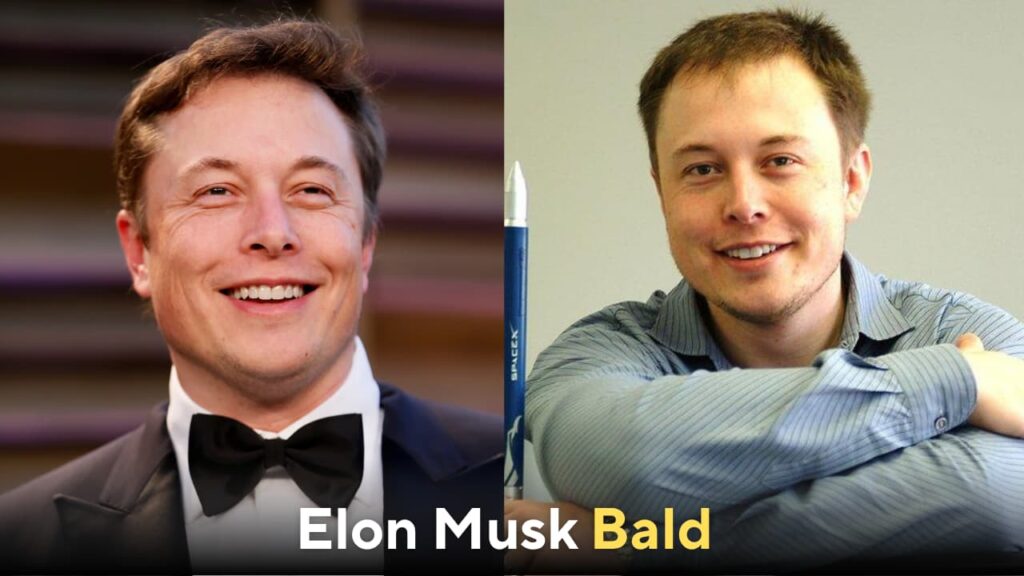
There are a handful of physical transformations in the celebrity world that people genuinely can’t stop talking about. Elon Musk’s hair is one of them. Compare a photo of him from the late 1990s back when he was building Zip2 and early PayPal to how he looks today, and the difference is striking enough that it has fueled years of speculation, analysis from hair restoration specialists, and countless internet threads trying to figure out exactly what happened.
The short answer is that yes, Musk did experience noticeable hair thinning earlier in his life. Whether he went fully bald is a different question and the honest answer is that he got close, but not quite there. What happened after is the more interesting part of the story.
What Early Photos Actually Show
Looking at verified public photographs from the late 1990s and early 2000s, a clear pattern is visible. Musk’s hairline was receding noticeably, and the hair across the top of his head had thinned significantly. The overall appearance was consistent with moderate-to-significant male pattern baldness in its active phase.
He wasn’t completely bald. But the trajectory of that hairline combined with the thinning density was pointing in one direction. Without intervention, most hair specialists looking at those photos would have projected continued loss over the following years.
That trajectory didn’t continue. At some point, the direction reversed.
Understanding Male Pattern Baldness
Before getting into what may have changed for Musk specifically, it helps to understand what was likely happening in the first place.
Male pattern baldness is medically known as androgenetic alopecia. It affects a significant percentage of men globally; some estimates suggest more than half of men over 50 experience it to some degree, though it frequently begins much earlier. The condition is driven by genetics and hormonal factors, particularly sensitivity to dihydrotestosterone (DHT), which gradually miniaturizes hair follicles over time.
The typical pattern starts with a receding hairline at the temples and thinning at the crown, eventually merging into more significant hair loss across the top of the scalp. The sides and back of the head are usually less affected, which is why they’re often used as donor sites in hair transplant procedures.
For someone like Musk, who showed clear signs of this pattern in his late twenties and early thirties, the expected outcome without treatment would have been continued progression. The fact that his hair looks dramatically fuller today with a more defined, lower hairline is what makes the transformation so visually remarkable and so widely discussed.
Did Elon Musk Get a Hair Transplant?
Here’s where honesty matters: Elon Musk has never publicly confirmed receiving a hair transplant or any other form of hair restoration treatment. No official statement, no interview disclosure, no social media confirmation. The procedure if it happened has never been acknowledged by Musk directly.
That said, the speculation among hair restoration specialists is widespread and consistent. The visual evidence they point to is the dramatic difference between his early-career appearance and his current one. That level of change, a denser hairline, fuller coverage, and a hairline that appears to sit lower than it did during peak recession is genuinely uncommon without some form of medical intervention.
The Procedures Most Commonly Discussed
When hair specialists analyze the transformation publicly, they typically point to one or both of two main procedures.
FUT (Follicular Unit Transplantation) sometimes called the strip method involves removing a strip of donor hair from the back of the scalp and transplanting individual follicular units to areas of thinning or recession. It was more common in earlier generations of hair restoration and can produce natural-looking results when performed well.
FUE (Follicular Unit Extraction) the more modern technique involves extracting individual follicles directly from the donor area without a linear incision. It’s less invasive, leaves minimal scarring, and has become the preferred method for most patients seeking natural results.
Either procedure could theoretically account for the visual change observed in Musk’s appearance. But without confirmation, these remain informed professional opinions rather than established facts.
Other Possible Explanations
Hair transplant surgery isn’t the only route to improved hair density. A few other factors are worth noting, even if they’re similarly unconfirmed in Musk’s case.
Medications like finasteride (which blocks DHT production) and minoxidil (which promotes hair growth) are widely used treatments for male pattern baldness. Both are clinically proven to slow hair loss and, in some cases, partially restore density. Either could contribute to an improved appearance, though neither typically produces the dramatic hairline change visible in the Musk comparison photos.
Styling and grooming can meaningfully affect how much hair someone appears to have, particularly when combined with strategic photography and lighting. This accounts for some variation across photos but doesn’t fully explain the structural difference in hairline position and density visible across Musk’s public appearances over the years.
Why People Keep Talking About It
The continued interest in Elon Musk’s hair transformation isn’t purely voyeuristic. For millions of men experiencing hair loss, seeing a high-profile figure apparently reverse the condition is genuinely interesting and potentially encouraging.
Hair restoration procedures have advanced dramatically over the past two decades. Results that would have looked obviously artificial in earlier generations now look entirely natural, and the stigma around discussing the procedures has decreased significantly. The Musk transformation whatever actually produced it has become a frequently referenced example in conversations about what modern hair restoration can achieve.
Conclusion
The record on Elon Musk’s hair is straightforward in some ways and genuinely uncertain in others. He did experience clear hair thinning and recession in his earlier years, photographs confirm that. His hair looks significantly fuller today that’s also clearly visible. What happened between those two data points is widely speculated about by hair specialists but has never been officially confirmed.
Whether the change came from surgery, medication, or some combination of factors, the transformation is real and visually significant. For anyone following the topic out of curiosity or personal interest in hair restoration options, the most accurate conclusion is simple: something changed, we don’t know exactly what, and the results speak for themselves.
Discover Also Is Billy Bob Thornton Bald? The Truth Behind His Hair, Aging, and Public Image

M Adnan Akram is the founder and lead writer at Back Casting Room, where he covers celebrity biographies, family histories, and the lesser-known figures behind well-known names. His work focuses on separating verified public information from speculation, drawing on publicly available records, interviews, and credible reporting to build accurate, well-researched profiles.
With a particular interest in entertainment and pop culture, Adnan writes about everything from celebrity net worth breakdowns to the private individuals connected to famous names, the spouses, family members, and background figures whose stories rarely get told in full.
At Back Casting Room, the goal is straightforward: give readers accurate, well-sourced information without the clickbait or unverified claims that often surround celebrity-adjacent stories.