
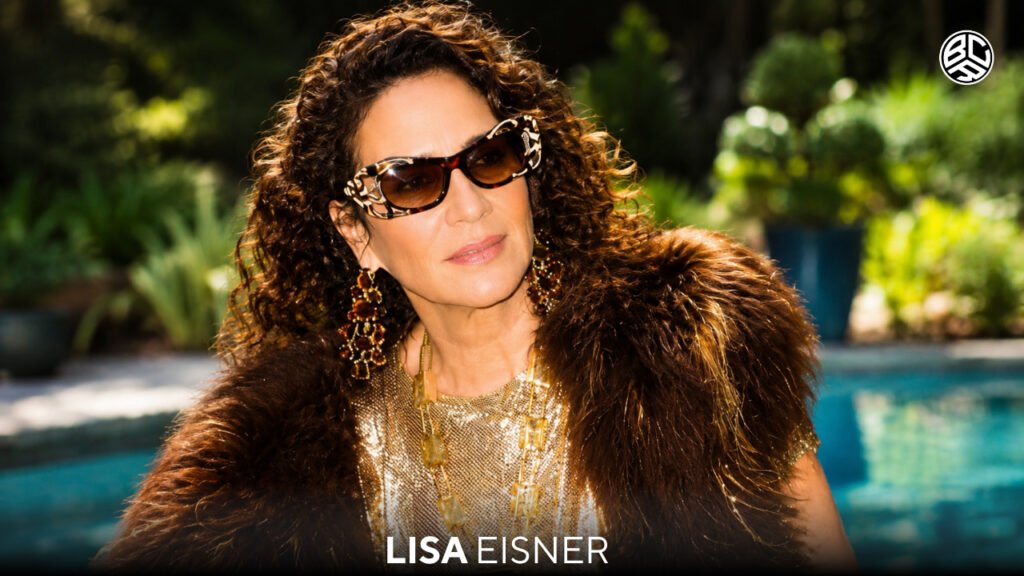
There is a particular kind of creative person who refuses to stay in one lane not out of restlessness, but because their curiosity is genuinely too wide for a single category to contain. Lisa Eisner is that kind of person.
She was born in Greybull, Wyoming in 1957, grew up shaped by American Western culture, and eventually became one of the fashion industry’s most respected figures first as a Vogue editor, then as a photographer and publisher, and finally as a jewelry designer whose work is collected, worn, and exhibited internationally. Each phase of that career built something the next one needed. The result is a creative identity that is entirely her own.
Quick Summary
| Category | Verified Information |
|---|---|
| Full Name | Lisa Eisner (née Lisa Norris) |
| Date of Birth | April 6, 1957 |
| Place of Birth | Greybull, Wyoming, USA |
| Nationality | American |
| Early Career | Fashion editor at Mademoiselle magazine |
| Major Editorial Role | West Coast editor at Vogue (Los Angeles) |
| Photography Work | Documentary-style photography focused on American Western culture |
| Publishing | Co-founder of Greybull Press (art and photography books) |
| Notable Book Project | Rodeo Girl (rodeo culture photography series) |
| Jewelry Brand | Founder of Lisa Eisner Jewelry (launched 2014) |
| Design Style | Sculptural, bold, art-inspired jewelry using natural materials |
| Other Media Work | Contributions to Vanity Fair, W Magazine, Harper’s Bazaar, NYT Magazine |
| Spouse | Eric Eisner (lawyer & entertainment executive) |
| Residence | Los Angeles, California, USA |
| Children | Two sons |
| Known For | Fashion editorial work, photography, publishing, contemporary jewelry design |
From Wyoming to the Masthead of Vogue
Lisa Eisner born Lisa Norris entered the fashion world through editorial journalism, beginning her career as a fashion editor at Mademoiselle before eventually becoming the West Coast editor for Vogue, based in Los Angeles.
That role placed her at the center of American fashion from the West Coast, a vantage point that shaped her sensibility in ways that distinguished her from her New York counterparts. She developed a reputation for an unconventional aesthetic independent, visually direct, and not particularly interested in performing the polished formality that traditional fashion editing often demanded.
Working for Vogue gave her access to the full spectrum of the fashion industry: the designers, the photographers, the stylists, the cultural conversations that were happening before they made it into print. It also gave her a rigorous understanding of visual storytelling: how an image is constructed, what it communicates, and what makes it linger in the memory.
That understanding would carry her through everything that came next.
The Camera and the Open Road: Photography and Rodeo Culture
After her years in fashion journalism, Lisa Eisner turned toward photography and documentary-style visual storytelling. This was not a pivot away from fashion so much as a deepening of the visual curiosity that had always driven her work.
Her most significant project from this period was nearly a decade of photography documenting rodeo culture, specifically rodeo queens. Rooted in her Wyoming upbringing, this work was both personal and anthropological: a sustained effort to look carefully at a world that mainstream fashion photography rarely touched.
The result was Rodeo Girl, a book that compiled this body of work and introduced a distinctly American visual vocabulary: sequined costumes, wide skies, women who combined glamour and toughness in ways that felt entirely real to audiences far beyond the rodeo circuit.
The project has since been cited as influential in shaping the broader cultural appetite for Western imagery in fashion and photography. Before the genre became trendy, she was already doing the serious, long-form version of it.
This photographic work was produced under the banner of Greybull Press, the independent publishing imprint she co-founded. Named after her Wyoming birthplace, the press focused on artistically driven books centered on American subcultures and visual narratives, the kind of publishing that prioritizes cultural substance over commercial formula.
Her images and editorial work appeared in Vanity Fair, W Magazine, Harper’s Bazaar, and The New York Times Magazine, establishing her as a versatile creative voice across multiple major outlets.
Moving Into Jewelry: Sculpture You Can Wear
The transition to jewelry design might seem, at first glance, like the sharpest turn in Lisa Eisner’s career. In practice, it was more of a convergence.
Her interest in jewelry had begun during her fashion editing years, developed through her proximity to designers and creative collaborators who were pushing against traditional categories in clothing, art, and adornment. What she eventually built as a jewelry designer reflects all of those influences: the editorial eye, the documentary instinct, the Western sensibility channeled into physical objects.
Her pieces are not fine jewelry in the conventional sense. They are not minimal. They are bold, sculptural, and expressive handcrafted objects that draw from Hollywood glamour, tribal and cultural motifs, and symbolic or mystical design elements. One of the qualities most consistently cited in descriptions of her work is that the pieces are not meant to be “precious” in the delicate, put-away sense. They are meant to be worn, experienced, and noticed.
This approach places her jewelry in a space between fashion accessory and art object which is exactly where the most interesting work tends to live.
Los Angeles as Creative Home
Lisa Eisner’s identity is inseparable from Los Angeles. She lives in Bel Air with her husband Eric Eisner, a lawyer and entertainment executive, and her work has been shaped by the city’s particular blend of industry, independence, and aesthetic experimentation.
The Los Angeles art scene, less institutional than New York’s, more open to hybrid practices and cross-disciplinary work, provided the right environment for her evolution from fashion editor to photographer to designer. She co-curated photography exhibitions in the city, participated in group shows focused on contemporary visual culture, and became a recognized figure in the broader creative community that spans fashion, film, art, and design.
Her jewelry has been featured in design exhibitions and contemporary art spaces that highlight female designers and independent craft practices. In recent years, she has extended her reach beyond California, participating in design residencies and exhibitions in New York and the Hamptons bringing her distinctly L.A. creative sensibility into different contexts.
A Career Built on Accumulation, Not Reinvention
What makes Lisa Eisner’s trajectory genuinely interesting is that it does not read as a series of fresh starts. Each chapter drew from the previous ones.
The fashion editing background gave her visual fluency and an understanding of how aesthetics communicate meaning. The photography work gave her a documentary discipline and a long-form relationship with her subject matter. The publishing work gave her an appreciation for how objects books, photographs, objects carry culture forward.
The jewelry is where all three converge: pieces that are visually fluent, culturally informed, and built with the kind of craft attention that comes from someone who has spent decades thinking seriously about what things look like and what they mean.
That accumulation, rather than any single achievement, is what has kept her relevant across multiple creative industries over more than three decades.
Conclusion
Lisa Eisner grew up in Wyoming, learned the fashion world from one of its most powerful platforms, turned her camera on American subcultures that were rarely photographed with serious intent, and eventually built a jewelry practice that has become one of the most distinctive in Los Angeles.
Her career resists the easy narrative of the single breakthrough moment. What it offers instead is something rarer: a sustained creative intelligence that has found new forms of expression without losing the thread of what it was always interested in. The rodeo queens, the Vogue spreads, the sculptural bracelets are all part of the same long conversation.
She just keeps finding new ways to have it.
Discover Also Gretchen Jones: From Project Runway Winner to Creative Business Strategist

M Adnan Akram is the founder and lead writer at Back Casting Room, where he covers celebrity biographies, family histories, and the lesser-known figures behind well-known names. His work focuses on separating verified public information from speculation, drawing on publicly available records, interviews, and credible reporting to build accurate, well-researched profiles.
With a particular interest in entertainment and pop culture, Adnan writes about everything from celebrity net worth breakdowns to the private individuals connected to famous names, the spouses, family members, and background figures whose stories rarely get told in full.
At Back Casting Room, the goal is straightforward: give readers accurate, well-sourced information without the clickbait or unverified claims that often surround celebrity-adjacent stories.