
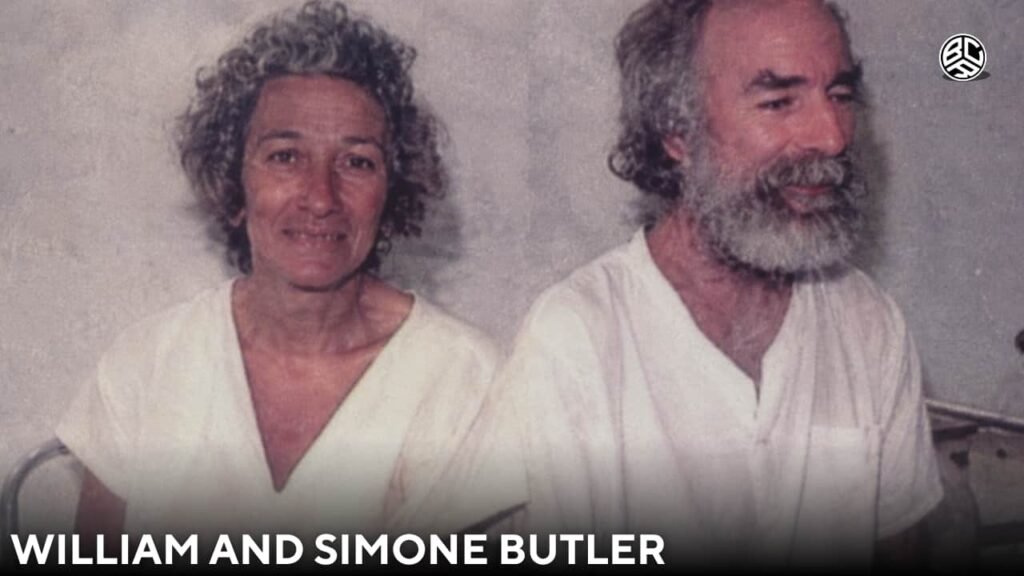
In April 1989, William and Simone Butler left Miami on a sailboat named Siboney with a plan to circle the world. By mid-June, their yacht was at the bottom of the Pacific Ocean, sunk by whales during the night. They were more than 1,200 miles from the nearest coastline, floating in a six-foot rubber life raft with no way to steer, no guarantee of rescue, and no clear timeline for when or whether anyone would find them.
They survived for 66 days.
The story of William and Simone Butler is one of the most extraordinary maritime survival accounts of the 20th century, and it holds up entirely to scrutiny. Every detail is as remarkable as it sounds.
The Voyage That Changed Everything
The Butlers were experienced sailors. William had been on the water since his teenage years, had completed multiple transatlantic crossings, and would eventually log more than 74,000 nautical miles over his lifetime. The circumnavigation attempt aboard Siboney was ambitious but not reckless; it was the kind of voyage that serious sailors work toward.
They left Miami, crossed through the Panama Canal, and entered the Pacific. The early part of the journey went without major incident.
Then, on the night of June 15, 1989, something happened that almost no maritime safety briefing accounts for.
When the Whales Came
According to William Butler’s account, dozens of whales surrounded the yacht during the night and repeatedly rammed it. The impacts damaged the fiberglass hull in a way that left no room for repair the vessel began taking on water fast. Siboney sank within minutes.
Before abandoning ship, the couple grabbed what they could:
- Fishing equipment
- Food supplies
- Emergency gear
- A hand-operated desalination pump called the Survivor-35
That last item, a compact device capable of converting seawater into drinking water, would prove to be the most important thing they rescued from the sinking boat.
They made it to the life raft. Six feet of rubber between them and the open Pacific, with no engine, no reliable communication, and no way to choose a direction.
66 Days on the Open Ocean
What followed was two months of survival conducted with a combination of ingenuity, determination, and an almost stubborn refusal to give in to despair.
Water
Every day, William operated the Survivor-35 pump, running seawater through the device to produce fresh, drinkable water. The pump generated roughly three liters per day, enough to keep two people alive under the brutal conditions of the open Pacific, but not enough to feel comfortable.
Dehydration remained a constant threat throughout the ordeal, compounded by exposure to sun and salt air that left both of them severely sunburned.
Food
The Pacific, at least, gave them something to eat.
William and Simone survived primarily on raw fish caught while drifting. William later recalled forcing himself to consume nearly two pounds of raw fish daily, and encouraging Simone to do the same. It was not a diet anyone would choose, but it provided the protein and nutrition their bodies needed to keep functioning through an extended physical ordeal.
The fishing was not always consistent. There were days when nothing came. There were encounters with sharks circling the raft. There were frenzies of activity beneath the surface that were as frightening as they were useful.
The Physical Toll
By the time the Costa Rican Coast Guard found and rescued them in August 1989, William and Simone had each lost approximately 50 pounds.
They were dehydrated. They were badly sunburned. The weeks of sun exposure, salt water, physical stress, and limited nutrition had left visible marks on both of them.
And yet, by the accounts of medical personnel who examined them after rescue at a hospital in Golfito, Costa Rica they were in surprisingly good condition given what they had endured. Two months at sea on a rubber raft, and they were alive and fundamentally intact.
After the rescue, William reportedly told journalists that he was looking forward to getting away from the ocean entirely, that the mountains and prairies had genuine appeal after what he had been through.
He went back to sailing.
The Book and the Legacy
William Butler documented the entire experience in 66 Days Adrift, a book that recounts the whale attack, the weeks of drifting, and the psychological dimensions of a survival situation that had no clear end point. Staying mentally focused when rescue might come tomorrow or might never come is a different kind of challenge than the physical one, and William’s account addresses that honestly.
The story attracted international media attention and interest from publishers and filmmakers. It became one of the defining survival narratives of its era not because it was dramatized, but because it didn’t need to be.
Simone Butler died before her husband. William continued sailing and speaking about their experience until his death in June 2024. His obituary cited the 66-day ordeal as one of the defining events of a life spent on the water.
Conclusion
The story of William and Simone Butler asks a simple question and answers it definitively: what can two prepared, determined people endure when there is no other option?
Sixty-six days on a six-foot raft. Raw fish. Desalinated seawater. Shark encounters. Fifty pounds lost. And at the end of it, both of them alive, pulled from the Pacific by the Costa Rican Coast Guard.
They went out to sail around the world and came back with a better story than that would have been.
NOTE: All details in this article are drawn from verified reporting by People magazine, UPI Archives, and William Butler’s own published account of the survival ordeal.
Discover Also Kathleen McLean: The Massachusetts Mother Killed by Her Husband and the Case That Followed

M Adnan Akram is the founder and lead writer at Back Casting Room, where he covers celebrity biographies, family histories, and the lesser-known figures behind well-known names. His work focuses on separating verified public information from speculation, drawing on publicly available records, interviews, and credible reporting to build accurate, well-researched profiles.
With a particular interest in entertainment and pop culture, Adnan writes about everything from celebrity net worth breakdowns to the private individuals connected to famous names, the spouses, family members, and background figures whose stories rarely get told in full.
At Back Casting Room, the goal is straightforward: give readers accurate, well-sourced information without the clickbait or unverified claims that often surround celebrity-adjacent stories.