
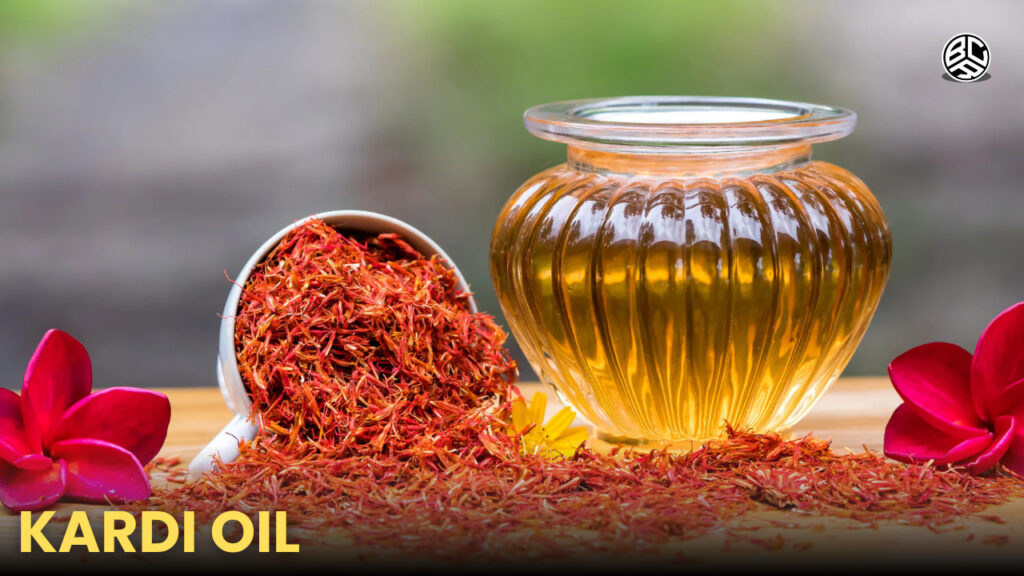
Walk into a traditional grocery store in India or Pakistan and you will likely spot a bottle of Kardi Oil sitting quietly on the shelf next to more familiar names. It doesn’t shout for attention. The packaging is usually simple, the oil itself is pale yellow, and the price is reasonable. But for generations of home cooks across South Asia, this oil has been a kitchen staple and lately, it has been catching the attention of health-conscious cooks well beyond the region.
So what exactly is it, and why does it deserve a closer look?
What Is Kardi Oil?
Kardi oil is the traditional South Asian name for safflower oil, a light vegetable oil extracted from the seeds of the safflower plant (Carthamus tinctorius). You might also see it labeled as kardai oil, kusum oil, or kusube oil depending on the region.
The safflower plant itself has a long history. It was originally cultivated for its flowers, which were used as a dye and in traditional medicine. Over time, the seeds became the more commercially valuable part, pressed to produce an oil that turned out to be well-suited for cooking.
The oil that comes out of those seeds is pale, almost golden, with a mild flavor that doesn’t interfere with whatever you’re cooking. That neutrality is one of the main reasons cooks keep coming back to it.
How It’s Made
The traditional method of producing kardi oil involves cold-pressing or wood-pressing the safflower seeds processes that use mechanical pressure rather than high heat or chemical solvents. This minimal approach helps preserve the oil’s natural nutrients and keeps the flavor clean.
Cold-pressed versions tend to cost a bit more, but many people consider that a fair trade-off. The oil retains more of its vitamin E content and natural character, and there are no chemical residues to worry about.
Refined safflower oil also exists. It goes through more processing, which makes it even more neutral in taste and extends its shelf life but at the cost of some nutrients. For everyday high-heat cooking, refined works fine. For those who want something closer to the source, cold-pressed is worth seeking out.
Nutritional Profile
Kardi oil earns its reputation as a healthy cooking option largely because of what’s in it and what isn’t.
What It Contains
The oil is rich in unsaturated fats, particularly linoleic acid, an Omega-6 fatty acid. Unsaturated fats are generally considered the more heart-friendly type compared to saturated fats. It also contains Vitamin E, a fat-soluble antioxidant that plays a role in both skin health and immune function.
What It Doesn’t Contain
Naturally cholesterol-free and low in saturated fat, with no trans fats in its unprocessed form the nutritional picture is clean for a cooking oil.
There are two main varieties worth knowing: high-linoleic safflower oil, which is richer in polyunsaturated fats and better suited for cold applications like salad dressings, and high-oleic safflower oil, which is more heat-stable and better for frying and sautéing.
Cooking With Kardi Oil
One of the practical reasons this oil has stayed popular is that it simply works well in the kitchen. The flavor is mild enough that it doesn’t compete with spices or other ingredients, a quality that matters a great deal in South Asian cooking, where the spice blend is supposed to be the star.
It handles heat reasonably well, making it suitable for everyday frying, tempering spices, and sautéing vegetables. The light color also means it doesn’t darken food in the way that some heavier oils can.
Beyond hot cooking, the neutral taste makes it a solid choice for salad dressings and marinades. It even works as a baking oil when a recipe calls for a flavorless fat.
Skin and Hair Uses
Kardi oil doesn’t stay in the kitchen. Thanks to its Vitamin E content and fatty acid profile, it has found a second life in beauty routines.
Applied to skin, it works as a lightweight moisturizer that absorbs fairly easily without leaving a heavy residue. It’s a common base ingredient in massage oils and homemade skincare preparations. Many people also use it as a hair oil massaging it into the scalp or applying it to the lengths of the hair as a conditioning treatment.
These uses are more traditional than clinical, but safflower oil does appear as an ingredient in commercially produced skincare products, which suggests the cosmetics industry sees some value in it as well.
A Note on Balance
No single oil is a complete answer to healthy eating, and kardi oil is no exception. It is high in Omega-6 fatty acids, which are essential but most modern diets already get plenty of Omega-6. The issue is that many people consume far less Omega-3, and that imbalance can work against the benefits that Omega-6 fats are supposed to provide.
The practical takeaway is to use kardi oil as part of a varied diet that includes other healthy fats: olive oil, mustard oil, or foods naturally rich in Omega-3s like flaxseed or fatty fish. Rotating oils is a sensible habit in general.
Conclusion
Kardi oil is one of those ingredients that earns its place quietly. It isn’t a superfood or a trend, it’s a reliable, mild-flavored, minimally processed vegetable oil with a genuinely useful nutritional profile. It cooks well, tastes neutral, and holds its own in both the kitchen and the bathroom cabinet.
For anyone who grew up with it, that’s not news. For anyone discovering it fresh, it’s worth picking up a bottle of cold-pressed safflower oil and seeing what the fuss is about. Chances are it’ll earn a permanent spot on the shelf.
Note: Always consult a nutritionist or healthcare professional for personalized dietary advice.
Discover Also Jant Blanc: The Emerging K-Beauty Brand Worth Knowing About

M Adnan Akram is the founder and lead writer at Back Casting Room, where he covers celebrity biographies, family histories, and the lesser-known figures behind well-known names. His work focuses on separating verified public information from speculation, drawing on publicly available records, interviews, and credible reporting to build accurate, well-researched profiles.
With a particular interest in entertainment and pop culture, Adnan writes about everything from celebrity net worth breakdowns to the private individuals connected to famous names, the spouses, family members, and background figures whose stories rarely get told in full.
At Back Casting Room, the goal is straightforward: give readers accurate, well-sourced information without the clickbait or unverified claims that often surround celebrity-adjacent stories.