

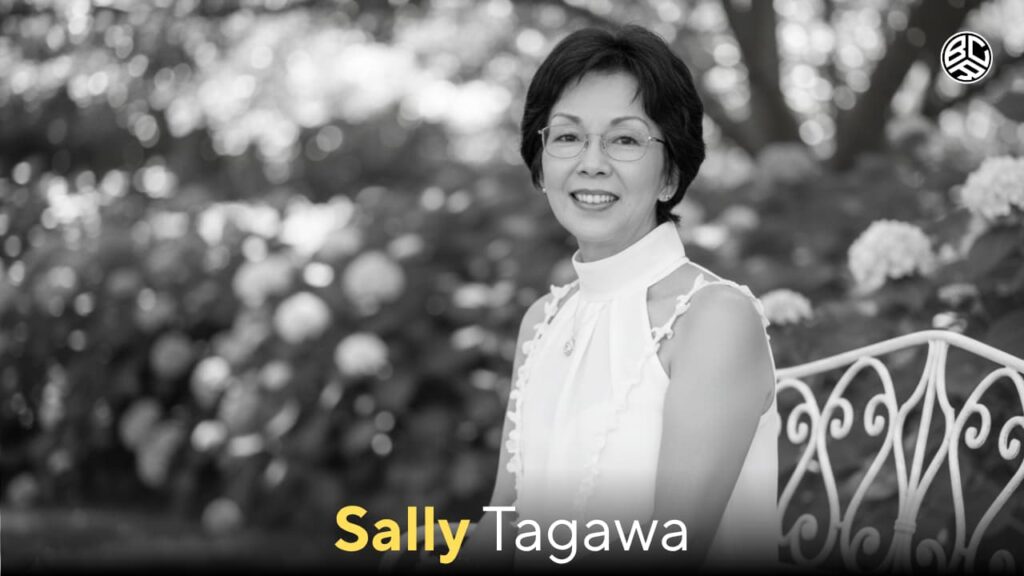
There are careers that generate consistent headlines and careers that generate something more lasting, a quiet, cumulative contribution to the stories a culture tells about itself. Sally Tagawa belongs firmly to the second kind. As a Japanese American actress, casting director, producer, and educator, she has spent decades working at the intersection of performance and advocacy, building a legacy that extends well beyond any individual film or television credit.
Her most visible years came during the 1980s and 1990s, when Hollywood’s treatment of Asian and Asian American characters was often dismissive, stereotypical, or simply absent. Tagawa worked during that era, contributed to some of its most significant productions, and spent the years helping younger performers navigate an industry that has slowly and incompletely improved.
A Career Built on More Than Performance
Sally Tagawa is American, of Japanese heritage, and has been active in film, television, and theater since the 1970s. The breadth of what she does or has done sets her apart from many performers of her era. She isn’t only an actress. She is also a casting director, a producer, an arts educator, and a consistent presence in Asian American cultural organizations.
That multi-disciplinary profile is both a personal choice and a reflection of her era. For Japanese American artists working in Hollywood during the decades when Tagawa built her career, creating opportunity often meant more than accepting whatever the studio system offered. It meant building infrastructure mentorship programs, independent productions, casting pipelines that didn’t exist unless people like Tagawa created them.
Her background in theater provided the foundation. Performance, direction, and the craft of character work were the tools she brought to her film and television career, and they’re the tools she has passed on through teaching and mentorship ever since.
The Joy Luck Club: A Landmark Role
If a single production defines Sally Tagawa’s place in Asian American cinema history, it’s The Joy Luck Club (1993). The film, directed by Wayne Wang and based on Amy Tan’s celebrated novel, explored the lives of Chinese American women across generations, their immigration stories, their relationships with their daughters, the tension between inherited culture and American identity.
What made the film extraordinary at the time was its cast: a predominantly Asian American ensemble given the opportunity to tell a deeply human, emotionally complex story without the constraints of stereotyping or tokenism. For an industry that had long treated Asian characters as peripheral figures exotic background or comic relief, The Joy Luck Club was a genuine departure.
Tagawa’s appearance in the film placed her within that historic production, and the film’s cultural impact resonates decades later as a turning point in Asian American representation in mainstream cinema. It demonstrated that audiences would show up for these stories, that Asian American actors could carry major dramatic productions, and that the industry’s assumptions about what would and wouldn’t work commercially were simply wrong.
Working With Spielberg: Always
Before The Joy Luck Club, Tagawa appeared in Always (1989), Steven Spielberg’s romantic fantasy film featuring Richard Dreyfuss, Holly Hunter, and John Goodman. Taking a supporting role in a Spielberg production during that era was a significant professional credential; the director was at the height of his commercial and cultural influence, and his films attracted extraordinary attention.
The role speaks to Tagawa’s ability to work across different registers of Hollywood production, from independent films driven by cultural purpose to major studio releases. That range of capacity to navigate both worlds is a specific kind of professional skill that not every performer develops.
Picture Bride: Independent Film and Cultural Storytelling
Picture Bride (1994) represents another significant credit in her filmography. The independent film explored the experience of Japanese women who emigrated to Hawaii in the early twentieth century through arranged marriages, using photographs as the basis for selecting husbands they had never met.
The film holds a meaningful place in Asian American cinema history not because of its commercial profile, which was modest, but because of what it represented. Independent films about specific historical and cultural Asian American experiences were rare, and Picture Bride treated its subject with the seriousness and detail it deserved. Tagawa’s involvement aligned her with exactly the kind of storytelling that has consistently mattered most to her: work that gave authentic voice to experiences that mainstream Hollywood had ignored.
Television: From MASH* to Star Trek
Tagawa’s television credits demonstrate the range of her career across different eras and genres. MASH*, which ran from 1972 to 1983 and remains one of the most celebrated series in American television history, provided an early credit. Star Trek: The Next Generation, with its ethos of inclusion and diversity, offered another. Nash Bridges added a more recent contemporary credit.
Appearing across multiple decades of television from the 1970s through the 1990s reflects consistent professional activity and adaptability. The television landscape shifted enormously across that span, and Tagawa moved through it while maintaining the parallel threads of her broader career.
The Work Behind the Camera
What distinguishes Sally Tagawa from many performers who occupied similar positions in Hollywood during the same era is the scope of what she did beyond acting. Casting direction is a particularly significant contribution. Casting directors shape who gets seen, who gets considered, and ultimately who gets roles which means a casting director with genuine commitment to Asian American representation has structural influence over the industry in a way that no individual performance can replicate.
Her work in theater mentorship and cultural arts advocacy was equally significant at the community level. Working directly with younger performers, running workshops, directing productions, and advocating for institutional change in how Asian American artists are treated all constitute a form of impact that doesn’t appear in IMDB credits but shapes the environment in which careers develop.
Some sources associate her with teaching roles at arts institutions in California and Hawaii, though the specific positions and timelines aren’t fully documented in the public record. What’s consistent across multiple independent sources is the picture of someone for whom education and advocacy were never separate from the work of performance itself.
The Context That Makes Her Career Matter
To understand Sally Tagawa’s significance requires understanding the environment in which she worked. The 1980s and 1990s were not a period of robust opportunity for Asian American actors in Hollywood. The industry’s history with Asian representation was deeply problematic marked by yellowface casting, stereotypical roles, and the routine exclusion of Asian American performers from leading parts even in stories ostensibly about Asian characters.
Working during that era as a Japanese American actress, while simultaneously building infrastructure for better representation, placed Tagawa in a particular historical position. She didn’t benefit from the changes she was helping to create in the way that subsequent generations have. She did the foundational work that made those changes possible which is a specific kind of contribution that often gets acknowledged only in retrospect.
A Private Profile, A Public Legacy
Sally Tagawa maintains a relatively low public profile today. Major interviews are infrequent. Social media presence is limited. Mainstream entertainment coverage has been sparse in recent years. Some current biographical details, precise age, current residence, and recent projects aren’t consistently verified across available sources.
That privacy doesn’t diminish the record of what she built. Within Asian American film and theater communities, her work during the formative decades of that movement is remembered and referenced with genuine respect.
Conclusion
Sally Tagawa’s career represents something important about how meaningful change in industries happens not through single dramatic gestures, but through consistent, multifaceted work done over decades. As an actress in landmark productions, as a casting director shaping who got opportunities, as a teacher and mentor developing the next generation, and as an advocate for cultural authenticity in storytelling, she built a legacy that extends far beyond any single credit.
For anyone tracing the history of Asian American representation in American cinema and theater, her name belongs in that story and the work she did to help write it deserves to be understood on its own terms.
Discover Also Stephen Ira: Writer, Activist, and Voice for Transgender Visibility

M Adnan Akram is the founder and lead writer at Back Casting Room, where he covers celebrity biographies, family histories, and the lesser-known figures behind well-known names. His work focuses on separating verified public information from speculation, drawing on publicly available records, interviews, and credible reporting to build accurate, well-researched profiles.
With a particular interest in entertainment and pop culture, Adnan writes about everything from celebrity net worth breakdowns to the private individuals connected to famous names, the spouses, family members, and background figures whose stories rarely get told in full.
At Back Casting Room, the goal is straightforward: give readers accurate, well-sourced information without the clickbait or unverified claims that often surround celebrity-adjacent stories.